
Your needs, this model
Does it fit your priorities?
Can your plan use the manual-listed 110 V AC, with at least 256 Wh and a 200 W total AC ceiling?
The exact A1720 manual specifies 110 V~. Its two AC outlets share a 200 W maximum, and the station weighs 9.57 lb; a higher continuous or startup load needs another plan.
Explore this need in the finder →Can your equipment use USB-C up to 60 W or the 12 V/10 A car outlet, and stay below 10 lb?
The A1720 has one 60 W bidirectional USB-C port and one 12 V/10 A (120 W) car-style output. It weighs 9.57 lb before any added accessories.
Explore this need in the finder →Would a separately supplied, connector-matched solar charger up to 65 W meet your refill requirement?
Anker's support entry says 12–28 V solar charger with DC 7909 male connector; manual limits shared DC input to 65 W maximum. No panel or solar cable is listed in the current U.S. box contents, so verify the separate charger and lead before purchase.
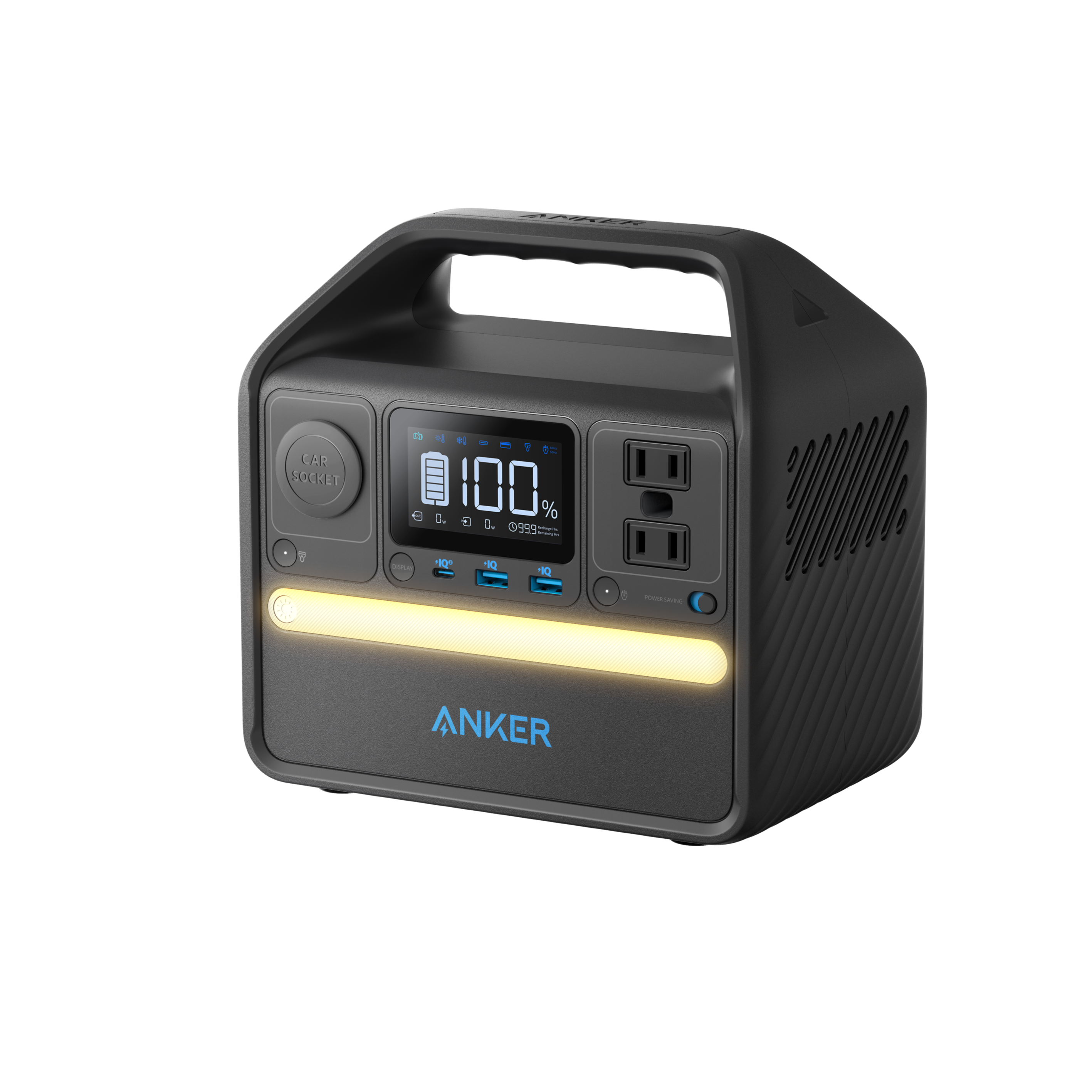
Explore this need in the finder →The Anker 521 PowerHouse A1720 is a compact, AC-capable station for a narrow job: keep smaller electronics and carefully checked household loads going without carrying a much larger battery box. The Anker SOLIX U.S. page identifies the current 521 as 256 Wh and 200 W, and its linked manual names the product number A1720. The page's structured product data identifies U.S. SKU A1720113 and GTIN 194644083953. That matters because Anker also used “521” for an older 213 Wh model, A1702. This review is specifically about the 256 Wh A1720, not the earlier product or a similarly numbered power bank.
Its capacity is for a small reserve, not a weekend guarantee
At 256 Wh, the battery can serve a modest phone, camera, light, tablet or laptop plan, but the nameplate number is not a promise of energy delivered at an AC receptacle. Inverter losses, the load's own charger, temperature, standby draw and whether the AC switch stays on all change what reaches the device. Anker does not publish a load-specific AC-delivered energy figure in the material checked here, so there is no defensible universal number of laptop charges or hours of lighting to quote. Add up wattage and expected hours for your equipment and leave a reserve. For a refrigerator, pump or other outage load, compare a larger station after measuring actual consumption and checking startup behavior.
Two AC outlets still share a 200 W ceiling
The manual specifies two AC output ports at 110 V~ and 200 W. Those are two places to plug in, not two 200 W channels: keep the total AC load at or below 200 W. A load rated above 200 W causes the unit to turn off, according to the guide. Motors can draw more at startup than their running labels suggest. The page also promotes 398 W total output, but that headline does not change the 200 W AC limit. Treat this as U.S. household-voltage-class power only; neither the manual nor listing establishes a 240 V or split-phase output.
Use the port that fits the device instead of adding adapters
The official listing and manual describe six connection points: two AC outlets, two USB-A ports, one bidirectional USB-C port and one 12 V car-style socket. USB-C can deliver or receive up to 60 W. Each USB-A port is specified at up to 2.4 A at 5 V, equivalent to 12 W. The car socket is 12 V/10 A (120 W). For a laptop that accepts 60 W USB-C, the direct USB-C route avoids using the AC inverter, while a 12 V accessory can use the car socket. Confirm the device's connector and input label first. Do not treat the 12 V input path as an additional output, or add the maxima for every port and assume all are available simultaneously; the 398 W marketing figure is not a rating for a single outlet.
Home, vehicle and solar recharging have different evidence
The current U.S. product page lists a DC adapter and a car-charging cable in the box. The A1720 manual rates the DC input at 11–28 V, 5.5 A, up to 65 W; its USB-C input also reaches 60 W. Refill at home with the supplied adapter; take the car cable when a vehicle route is useful. The manual gives no separate vehicle-input wattage, so no drive-time recharge promise is made. An Anker support entry for the 521 says a compatible solar charger uses a 12–28 V DC 7909 male connector, but the product's listed box contents include neither a panel nor a solar lead. The overall DC input ceiling is 65 W, not 200 W; verify the exact panel and cable before buying a solar accessory.
Small details that affect real use
At 9.57 lb and about 8.5 × 8.32 × 5.67 inches, it is easier to move than a 500 Wh class station, but its 256 Wh battery remains a limited reserve. The manual says USB-A and USB-C start charging when devices are plugged in, while AC and the car socket need their respective output buttons. It recommends leaving Power Saving Mode on except when charging low-power devices such as a camera; a low-draw device can otherwise be stopped by the saving behavior. Keep the unit in its stated 0–40°C operating range, in a cool, dry place, and use and recharge it at least once every three months during long storage. The manual says it is not permitted on aircraft, which rules it out for a flight kit despite its small size.
Who should choose it—and who should not
Choose the A1720 when portability is important, your must-run devices are compatible with its USB ports, 12 V socket or a low-power AC load, and a single 256 Wh battery is enough for your plan. It is not a substitute for a 500 W station: Anker's 535 PowerHouse A1751 offers 512 Wh and 500 W rated AC output, at a much heavier listed 16.75 lb. If AC is unnecessary, the Anker SOLIX C200 DC avoids an inverter and is substantially lighter, but its exact U.S. configuration has no AC outlet or 12 V output socket. Pick neither until you have identified the device power and runtime you require. The 521's current U.S. product page advertises a five-year warranty, while the older linked A1720 manual prints a 24-month limited warranty; confirm the current written terms and the seller's market before relying on a warranty duration. No sample test, measured runtime or ownership claim is made here.
For port operation and electrical limits, see the A1720 manual linked from Anker's U.S. page, the Anker 521 U.S. product page, and the Anker 521 accessories support entry.
Key details at a glance
| Nameplate battery capacity | 256 Wh |
|---|---|
| Rated AC output | 200 W |
| Maximum solar input | 65 W |
| Maximum USB-C output per port | 60 W |
| Listed weight | 9.57 lb |
| 12 V DC output | 120 W |
| Base warranty term | 5 years |
| AC outlet output | Yes |
| USB-C ports | 1 |
| USB-A ports | 2 |
| Solar input ports | 1 |
| 12 V car-style output | 120 W |
| Battery chemistry | LiFePO4 |
Use the exact model’s instructions for operating limits, supplied equipment and version differences.
Sources for this assessment
- Anker 521 PowerHouse - 256Wh | 200W (Anker SOLIX U.S. product page)
- Anker 521 Portable Power Station (PowerHouse 256Wh), Product Number A1720, User Manual V01 (English section)
- Anker 521 Portable Power Station's Accessories (Anker SOLIX support)
- Anker 521 PowerHouse exact product-page image (Anker SOLIX U.S.)

A useful match starts with the loads that matter.
Use the finder for hard electrical requirements, then check appliance starting behavior, actual run time and the exact package in the full assessment.