
Your needs, this model
Does it fit your priorities?
Do you need a light 120 V AC plan with at least 299 Wh and 300 W rated output?
The exact A1721 is 8.6 lb, with 299 Wh listed capacity and a manual-rated 300 W AC ceiling shared by both outlets. A higher continuous or startup load needs a different plan.
Explore this need in the finder →Would one 60 W bidirectional USB-C port and a 12 V/10 A socket cover your small DC loads?
One A1721 USB-C port can input or output up to 60 W; the separate 12 V/10 A car socket is rated 120 W. Its second USB-C output is 20 W maximum.
Explore this need in the finder →Can a separate, connector-matched solar source rated up to 100 W meet your refill need?
The manual permits a solar charger from 11 to 28 V with the male DC 7909 plug, up to the station's 100 W DC-input limit. The standalone box list does not include a solar panel or lead.
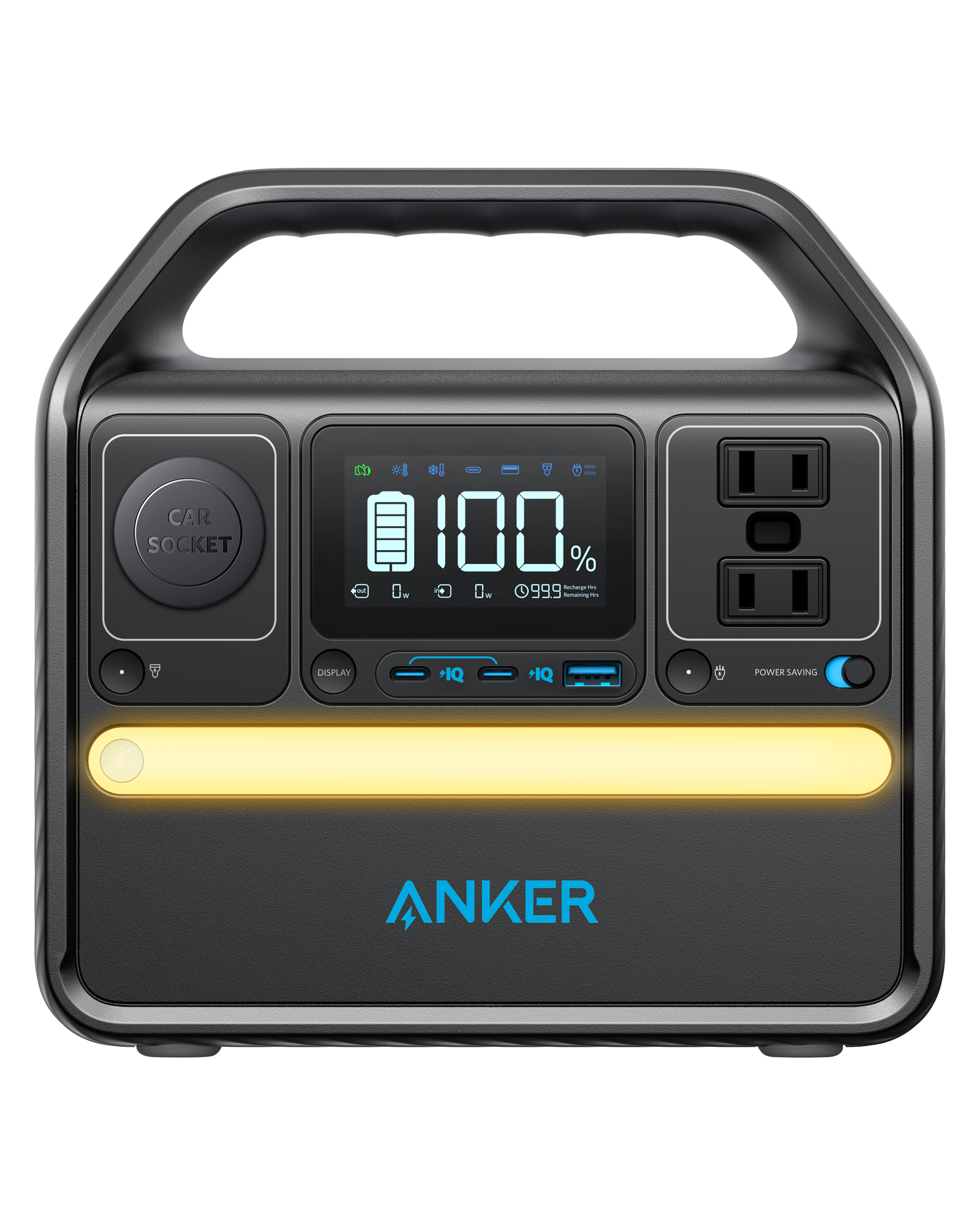
Explore this need in the finder →The Anker PowerHouse 522 (A1721) is a small AC-capable station for a light, tightly scoped load list: phones, cameras, a modest laptop, a 12-volt accessory and perhaps one low-wattage appliance. The Anker U.S. product page identifies SKU A1721111 and GTIN 194644131920, and the matching manual names product number A1721. This is the 299 Wh / 300 W 522, not the neighboring PowerHouse 521 A1720 or an older product with a similar number.
Capacity and outlet power are separate limits
Anker markets the 522 at 299 Wh. The manual's English specification table separately calls the battery's cell capacity 320 Wh. These are not contradictory measures of energy you can necessarily use at a device: the listing value is the appropriate nameplate figure for comparing stations, while no source checked here promises a particular AC-delivered energy after conversion and standby losses. Runtime still depends on the actual load, its own power supply, temperature and how long AC or the car socket stays enabled. Do not convert 299 Wh directly into a guaranteed number of laptop charges or hours of cooling.
Two receptacles share one 300 W AC ceiling
The matching manual's English section specifies 120 V AC, 60 Hz and 300 W maximum; it says an AC load above 300 W makes the unit turn off. The two outlets are convenient for two small plugs, not two independent 300 W channels. Check both the steady draw and any startup requirement before relying on a motor, pump or appliance. Anker's U.S. marketing page also promotes “600W Enhanced Power” with SurgePad for a sudden spike. That is not a substitute for the manual's 300 W rated limit: the manual does not establish a dependable 600 W operating plan, so do not select it for a 600 W continuous load or assume an uncertain startup will work.
Port mix suits small electronics better than an AC-only plan
The front panel combines two AC outlets, two USB-C ports, one USB-A port and one 12 V car-style socket. One USB-C port is bidirectional and supports up to 60 W in or out; the second USB-C port is output-only and tops out at 20 W. USB-A is listed at 5 V / 2.4 A, or 12 W maximum. The car socket is 12 V / 10 A (120 W). For a laptop that accepts 60 W USB-C, charging directly can avoid running its adapter through the AC inverter; use the 20 W USB-C or 12 W USB-A port for suitable smaller devices. A port's watt limit does not promise the device will accept that rate, and the published maxima should not be added together as a guaranteed combined output.
Solar and car recharging need the right lead
The manual lists a DC input of 11–28 V, 9 A and up to 100 W. It says a compatible solar charger uses a male 8 mm DC 7909 connector. The U.S. page's box list includes a DC adapter, a car-charging cable and a guide; it does not list a solar panel or solar lead. A panel's open-circuit voltage and connector must fit the manual's limits, and the 100 W input ceiling is modest compared with a larger station's solar potential. The manual also shows the car recharge route, but it does not give a separate vehicle-input rate; do not plan a specific drive-time refill from the car socket's 120 W output rating.
Practical limits matter on a trip
At a listed 8.6 lb and about 8.5 × 8.32 × 5.67 inches, this is easier to hand-carry than larger 500 Wh models, but 299 Wh remains a small reserve. The front light can help around a tent or work surface; the manual shows a normal ambient mode and SOS signaling, not a substitute for dedicated lighting. AC and car output switches must be turned on deliberately and draw some no-load power when left active. Power Saving Mode helps stop waste after devices finish charging, but switch it off when a compatible low-draw device needs uninterrupted power; Anker's manual gives a CPAP as an example while separately warning against emergency-critical medical use. Store it dry and within its stated temperature limits, and follow the manual's periodic recharge guidance. It says this station is not permitted on aircraft.
Choose it when the small-load plan actually fits
The 522 makes sense when you value the lighter body, want a 120 V outlet for equipment rated at no more than 300 W, and can use its USB-C or 12 V ports for much of the load list. Compared with the 521 A1720, the 522 lists 299 Wh and 300 W AC rather than 256 Wh and 200 W, while its port mix trades the 521's two USB-A ports for a second USB-C port. If your essential appliance needs more than 300 W continuously, needs 240 V, or depends on a proven high startup surge, look at a larger, appropriately rated model instead. If the device can charge from USB-C or 12 V only, a DC-focused station may be lighter and avoid an inverter you would not use. The product page snapshot checked for this review showed the 522 sold out; availability can change, and no price or live stock promise is made here.
For the exact option and box list, see the Anker PowerHouse 522 U.S. page. Port instructions and the A1721 English specifications are in Anker's A1721 user manual; note that its separate Japanese-language section lists a localized 100 V specification, while the English section lists 120 V. The current U.S. warranty table lists the A1721 under a 60-month category; terms still depend on eligible purchase channel and location.
Key details at a glance
| Nameplate battery capacity | 299 Wh |
|---|---|
| Rated AC output | 300 W |
| Maximum solar input | 100 W |
| Maximum USB-C output per port | 60 W |
| Listed weight | 8.6 lb |
| 12 V DC output | 120 W |
| Base warranty term | 5 years |
| AC outlet output | Yes |
| USB-C ports | 2 |
| USB-A ports | 1 |
| Solar input ports | 1 |
| 12 V car-style output | 120 W |
| Battery chemistry | LiFePO4 |
Use the exact model’s instructions for operating limits, supplied equipment and version differences.
Sources for this assessment

A useful match starts with the loads that matter.
Use the finder for hard electrical requirements, then check appliance starting behavior, actual run time and the exact package in the full assessment.