
Your needs, this model
Does it fit your priorities?
Do you need a 120 V AC station with at least 500 W continuous output?
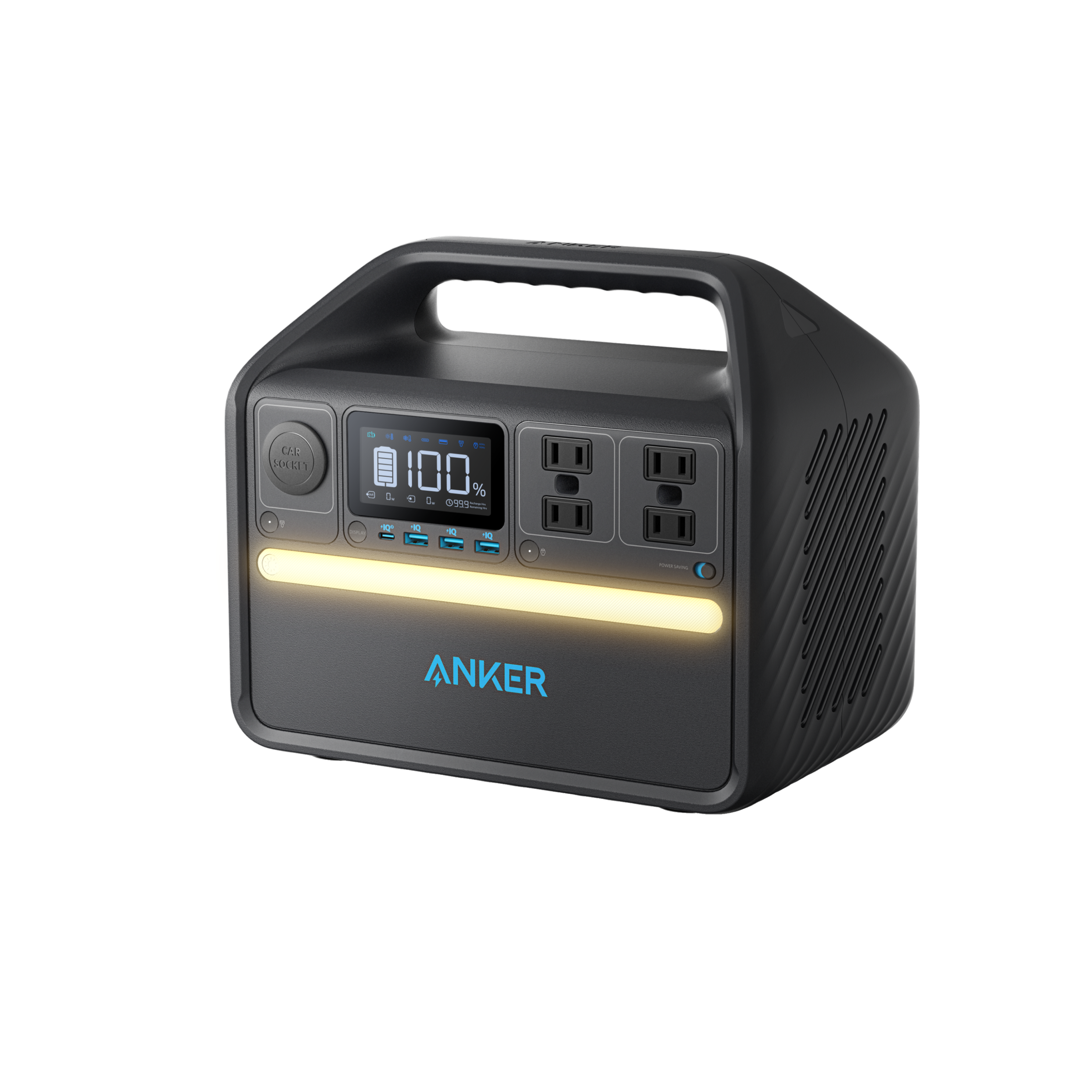
The A1751 has four AC receptacles but a single 500 W rated output limit. The product page also mentions 750 W surge; the manual says loads above 500 W shut the unit down, so plan around 500 W and check appliance startup behavior separately.
Explore this need in the finder →Would one 120 W solar input or the included 120 W vehicle-charge path cover the way you recharge?
The manual supports either a compatible 11–28 V DC7909 solar source or a 12 V vehicle charging cable, each up to 120 W. The A1751 has one DC input and the paths are alternatives; its standalone carton does not include a solar panel according to the exact page's What You Get list.
Explore this need in the finder →Is 60 W USB-C and a 120 W car-style 12 V output enough, with a 17 lb carry ceiling?
The station has one USB-C port rated up to 60 W in and out, plus a 12 V/10 A car-style output rated 120 W. At 16.75 lb for the station alone it fits a 17 lb ceiling, but not a tighter 16 lb limit. Its USB-C port is not a 100 W or 140 W port.
Explore this need in the finder →The Anker 535 PowerHouse (A1751, US SKU A1751113) is a 512 Wh LiFePO4 station for plans that need household AC but stay below 500 W. Four outlets share that ceiling; it also has one 60 W USB-C, three USB-A and a 120 W car socket. At 16.75 lb, it is handle-portable rather than a hiking battery. If your gear already takes USB or DC, compare the lighter C300 DC instead.
Four sockets do not mean four separate inverters
The four AC receptacles share a 500 W rated output. A laptop, lights, network gear or modest campsite appliance may fit; an appliance above 500 W does not. Anker's page also lists 750 W surge, while the manual says a device above 500 W will shut the station off. Do not use the surge figure as a continuous allowance; check startup demand separately.
There is a second detail worth checking before buying for a plug-specific device. The current US page gives the AC output as 120 V, but its outlet sub-spec labels the receptacles “4× NEMA 6-20”; the A1751 manual describes 110 V AC. Those statements do not establish a clean receptacle subtype. The product still belongs in a 120 V-class comparison, not a 240 V shortlist, but anyone who needs a particular NEMA connector should verify the physical receptacle and rating with Anker rather than infer it from the subtype label.
More stored energy than a pocket unit, with a modest USB-C ceiling
The battery is listed at 512 Wh and uses LiFePO4 chemistry. That is nameplate capacity, not a promise that 512 Wh reaches an AC appliance: inverter losses, reserve, temperature and load all matter, and the sources reviewed do not give a load-specific AC-delivered energy figure. Anker's product listing promotes 3,000-plus cycles and a long service-life claim; those are manufacturer claims, not an independent cycle test. The exact US listing shows a five-year full-device warranty, but warranty terms and retailer availability can change.
The port mix is practical but modest for current laptops: its single USB-C port is rated up to 60 W in either direction, below a 100 W or 140 W requirement. Three USB-A ports are rated up to 12 W each, and a 12 V/10 A car-style socket is rated at 120 W. Match the port's voltage and current to the device; individual maxima do not establish that every port can deliver its maximum at once.
Charging choices and what is actually in the box
The included AC adapter supplies up to 120 W to the DC input; the manual depicts it paired with USB-C for up to 180 W, and Anker advertises an under-2.5-hour charge to 80 percent. That is a manufacturer claim, not a measurement. Solar accepts a compatible 11–28 V DC7909 source at up to 10 A/120 W. Shade, panel angle, temperature and input limits affect actual charging.
The standalone box list includes the adapter and car-charging cable, not a solar panel. Anker links a “535 Solar Generator” choice, but its route returned 404; panel model, cable and carton are unconfirmed. Do not assume they come with A1751113. Solar, vehicle and adapter charging are separate routes; simultaneous input operation is not established.
Low-draw loads, storage and safety
Power-saving mode can shut down output when a small device stops drawing enough power. The manual recommends disabling it for low-draw uses such as cameras or a CPAP, which matters for time-lapse or steady trickle power. But the manual also says not to rely on the station for medical equipment whose failure could endanger life or property. A CPAP plan needs clinician/device-maker guidance, a reserve and a tested alternative; this is not guaranteed medical backup.
Keep it dry and ventilated, use it on a level surface, and observe its separate charging and discharging temperature windows. The manual lists charging from 32–104°F and discharge from −4–104°F. It also warns that leaving the AC or car output enabled consumes standby power. Turn outputs off when they are not needed, and use the current instructions for long-term storage rather than assuming that a charged display means the battery can sit unattended indefinitely.
Who should choose it?
Choose it when one plan needs 120 V-class AC, 500 W continuous, 512 Wh and a 12 V car outlet, and a 17 lb station is manageable. A 500 W floor passes but 501 W fails; 120 W solar passes but 121 W does not; 60 W USB-C passes but 61 W does not. A 572 Wh floor or 16 lb maximum also removes it. Battery expansion is not documented, so an essential expansion requirement is not treated as met.
The Anker SOLIX C300 offers only 300 W AC and 288 Wh but weighs about 9 lb and has a 140 W USB-C port. The C300 DC has no AC inverter, but is lighter and offers higher-power USB-C. Step up to the C1000 Gen 2 if your essential AC draw is above 500 W or you need more stored energy. The 535 page showed “Last Chance” and “Sold Out” on the checked date; no physical sample or independent electrical test was used.
Key details at a glance
| Nameplate battery capacity | 512 Wh |
|---|---|
| Rated AC output | 500 W |
| Manufacturer surge rating | 750 W |
| Maximum solar input | 120 W |
| Maximum USB-C output per port | 60 W |
| Listed weight | 16.75 lb |
| 12 V DC output | 120 W |
| Base warranty term | 5 years |
| AC outlet output | Yes |
| USB-C ports | 1 |
| USB-A ports | 3 |
| Solar input ports | 1 |
| 12 V car-style output | 120 W |
| Battery chemistry | LiFePO4 |
Use the exact model’s instructions for operating limits, supplied equipment and version differences.
Sources for this assessment
- Anker 535 PowerHouse - 512Wh | 500W (Anker SOLIX US product page)
- Anker 535 Portable Power Station (PowerHouse 512Wh), Product Number A1751, User Manual V03 (English section)
- 535 Solar Generator linked configuration route (Anker SOLIX US)
- CPSC recall of Anker 535 Power Banks (PowerCore 20k), model A1366
A useful match starts with the loads that matter.
Use the finder for hard electrical requirements, then check appliance starting behavior, actual run time and the exact package in the full assessment.