
Your needs, this model
Does it fit your priorities?
Must a 400 W named panel and station-side lead be in the exact package?
The U.S. G17831A7 offer lists one PS400 (A2437), two 3 m MC4 extension cables and one 0.5 m MC4-to-XT-60 station cable. Other C2000 offers may have different contents.
Explore this need in the finder →Do you need a 2 kWh station that can accept up to 800 W, knowing this package supplies one 400 W panel?
The A1783 has one 11–60 V, 17 A maximum solar/DC input rated up to 800 W. The included PS400 is 400 W, so the station input ceiling and included panel wattage are not interchangeable.
Explore this need in the finder →Would you rather keep solar bundled now and add a battery only if you later need more endurance?
This package includes the PS400, not a BP2000. The station separately supports one BP2000 Gen 2 for a documented 4,096 Wh nameplate plan, still at 120 V and 2,400 W AC.
Explore this need in the finder →This exact U.S. package pairs the Anker SOLIX C2000 Gen 2 station with one named PS400 portable solar panel. The offer identifies SKU G17831A7 and GTIN 194644368111; the station is model A1783, and Anker’s PS400 guide identifies the panel as A2437. That detail matters: this is a documented station-and-panel package, not just a C2000 with an unspecified “400 W solar” label.
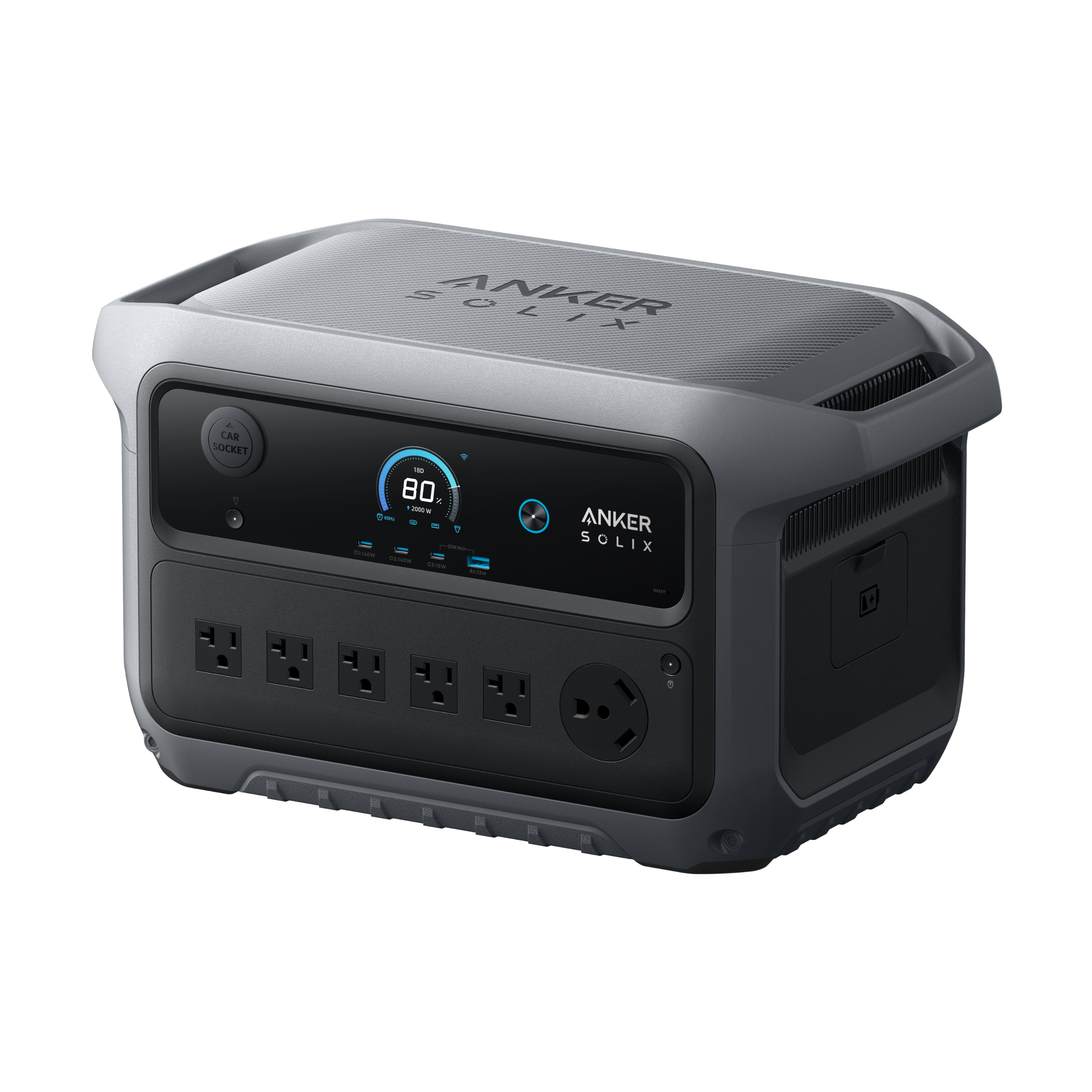
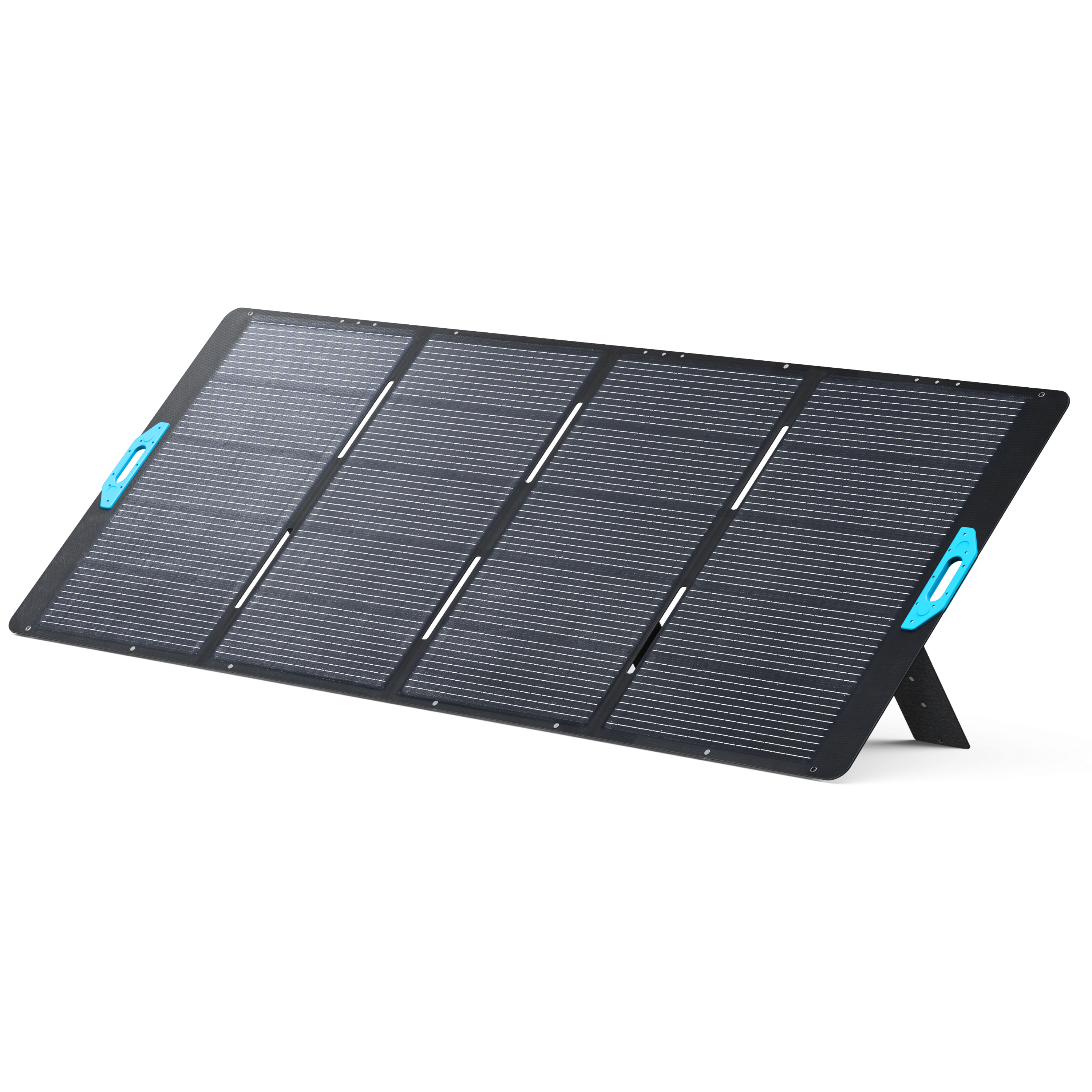
What the selected package actually supplies
Anker’s U.S. offer page lists one C2000 Gen 2 station, one 400 W PS400 panel, the station’s AC charging cable, two 9.8-foot MC4 solar extension cables, one 1.6-foot MC4-to-XT-60 solar charging cable, a quick-start guide, and safety and warranty information. Anker’s separate panel page and its A2437 guide identify the PS400 panel and the matching lead arrangement. This resolves the panel and station-side solar-lead question for this exact SKU; it should not be generalized to other C2000 bundles whose component lists differ.
The station is 41.7 lb and the PS400 is listed at 35.3 lb. The sources do not give a total package weight, and the station-only photo above does not show the panel. Treat the setup as two substantial pieces rather than one easy carry. The panel folds to 39 × 26.6 × 2 inches and opens to 100 × 39 × 1.2 inches, so storage and a clear sun-facing area matter as much as the station’s footprint.
A capable station, still a 120 V system
The C2000 Gen 2 stores a manufacturer-rated 2,048 Wh in an LFP battery and supplies up to 2,400 W of rated 120 V AC power, with 4,000 W peak power. It has five household AC receptacles and a TT-30R rated up to 20 A/2,400 W. That is not a full 30 A RV service, and all the outlets share the same station-wide inverter limit. Check the RV or appliance’s voltage, running watts and startup demand; a plug shape or peak-watt number does not establish that a load fits. This station does not provide 240 V output.
The included panel does not increase the inverter rating or the battery’s stored capacity. Its job is to replenish the station when sunlight and placement cooperate. The 2,048 Wh figure is nameplate energy, not guaranteed AC energy at the outlets; losses, reserve settings, temperature and actual load behavior affect runtime. The manufacturer’s fridge-duration and charging-time figures are internal test claims, not independent measurements.
Panel rating versus the station’s solar ceiling
The C2000 has one 11–60 V, 17 A maximum XT60i solar/DC input rated up to 800 W. The included PS400 is a 400 W panel with published operating voltage of 48 V and current of 8.33 A; its listed open-circuit voltage is 57.6 V. Anker supplies the MC4-to-XT-60 station cable in this package, but the one included panel is still 400 W—not an 800 W array. Do not infer that a second panel, a series connection or another cable is included or supported just because the station input ceiling is higher. Keep any future array within the exact manual’s voltage, current and wiring limits. Solar nameplate power also does not guarantee that the station will receive that much in ordinary weather.
Anker describes four panel stand angles and an IP67 panel rating, while warning that the MC4 ports need their rubber covers before exposure to rain or water. That weather statement applies to the panel, not automatically to the power station. The folded panel is large enough that setting it in sun while keeping the station shaded, dry and ventilated takes some planning. Its rating is useful for travel or outage recharge, not a promise of uninterrupted household power.
Who should choose the package?
This bundle is most compelling when a buyer wants a 2 kWh-class station and a named, wired-in-the-box panel in the same exact offer: a fixed RV stop, shed, cabin or home outage plan where the panel can be unfolded and repositioned. A solar-panel requirement should be treated separately from a station-input requirement. The package includes one 400 W panel, while the station accepts up to 800 W; those are different facts and the questionnaire asks about them separately.
Choose the standalone C2000 Gen 2 review if you already own compatible panels or do not need one in the package. Consider a smaller station if lifting and storing both pieces is the deciding constraint. If your essential load needs 240 V, more than 2,400 W continuously, or a true 30 A RV source, this C2000 package is the wrong output architecture; do not solve that mismatch with adapters or the 4,000 W surge figure. One compatible BP2000 Gen 2 can be added separately for a documented 4,096 Wh nameplate plan, but that battery is not part of SKU G17831A7 and does not raise the station’s AC output. No sample, independent runtime test or customer-review evidence is claimed here.
Configuration and electrical details were checked against Anker SOLIX U.S. SKU G17831A7, the C2000 Gen 2 A1783 product/manual sources, and the PS400 A2437 U.S. product/guide sources. The package image is not a photograph of the complete kit.
Key details at a glance
| Nameplate battery capacity | 2048 Wh |
|---|---|
| Rated AC output | 2400 W |
| Manufacturer surge rating | 4000 W |
| Maximum solar input | 800 W |
| Included panels, combined nameplate | 400 W |
| Maximum USB-C output per port | 140 W |
| Listed weight | 41.7 lb |
| Compatible extra-battery expansion | Yes |
| 12 V DC output | 120 W |
| Maximum AC recharge input | 1800 W |
| Manufacturer UPS transfer figure | 10 ms |
| Base warranty term | 5 years |
| USB-C ports | 3 |
| USB-A ports | 1 |
| Solar input ports | 1 |
| 12 V car-style output | 120 W |
| Battery chemistry | LFP |
| TT-30 RV outlet | Yes |
| Expansion battery in this package | No |
| Solar panels in exact offer | 1 |
Use the exact model’s instructions for operating limits, supplied equipment and version differences.
Sources for this assessment
- Anker SOLIX US C2000 Gen 2 Portable Power Station
- Anker SOLIX C2000 Gen 2 Portable Power Station User Guide (A1783), United States
- Anker SOLIX BP2000 Expansion Battery (Gen 2), US product page
- Anker SOLIX BP2000 Expansion Battery (Gen 2) User Guide (A17831A1-85)
- Anker SOLIX C2000 Gen 2 + Expansion Battery US package offer
- Anker SOLIX C2000 Gen 2 refurbished US offer
- Anker SOLIX C2000 Gen 2 + Expansion Battery + 400 W Solar Panel
- Anker SOLIX C2000 Gen 2 + Expansion Battery + 2 × 400 W Solar Panels
- Anker SOLIX 3 × C2000 Gen 2 US package
- Anker SOLIX 5 × C2000 Gen 2 US package
- Anker SOLIX U.S. C2000 Gen 2 + 400W Solar Panel exact offer SKU G17831A7
- Anker SOLIX U.S. PS400 Portable Solar Panel product page
- Anker SOLIX PS400 Portable Solar Panel User Guide (A2437)
- Reused exact Anker SOLIX C2000 Gen 2 product rendering
- Anker SOLIX U.S. PS400 product-page image

A useful match starts with the loads that matter.
Use the finder for hard electrical requirements, then check appliance starting behavior, actual run time and the exact package in the full assessment.