
Your needs, this model
Does it fit your priorities?
Do you need a small 120 V station for a device that stays within 300 W continuous?
The C300 supplies 120 V AC through three receptacles, with 300 W rated continuous output. Its separate 600 W SurgePad claim is not the continuous rating; verify motor or compressor start-up separately.
Explore this need in the finder →Is a 120 W 12 V car-style socket enough for your DC accessory?
The A1722 guide lists a 12 V, 10 A car socket rated for 120 W. Check plug, fuse, current and any shared-output limits on the accessory.
Explore this need in the finder →Do you need 140 W USB-C output and a 100 W solar ceiling?
One C300 USB-C port is listed up to 140 W and the solar input is up to 100 W. The manual says USB-C and XT60 charging cannot run simultaneously.
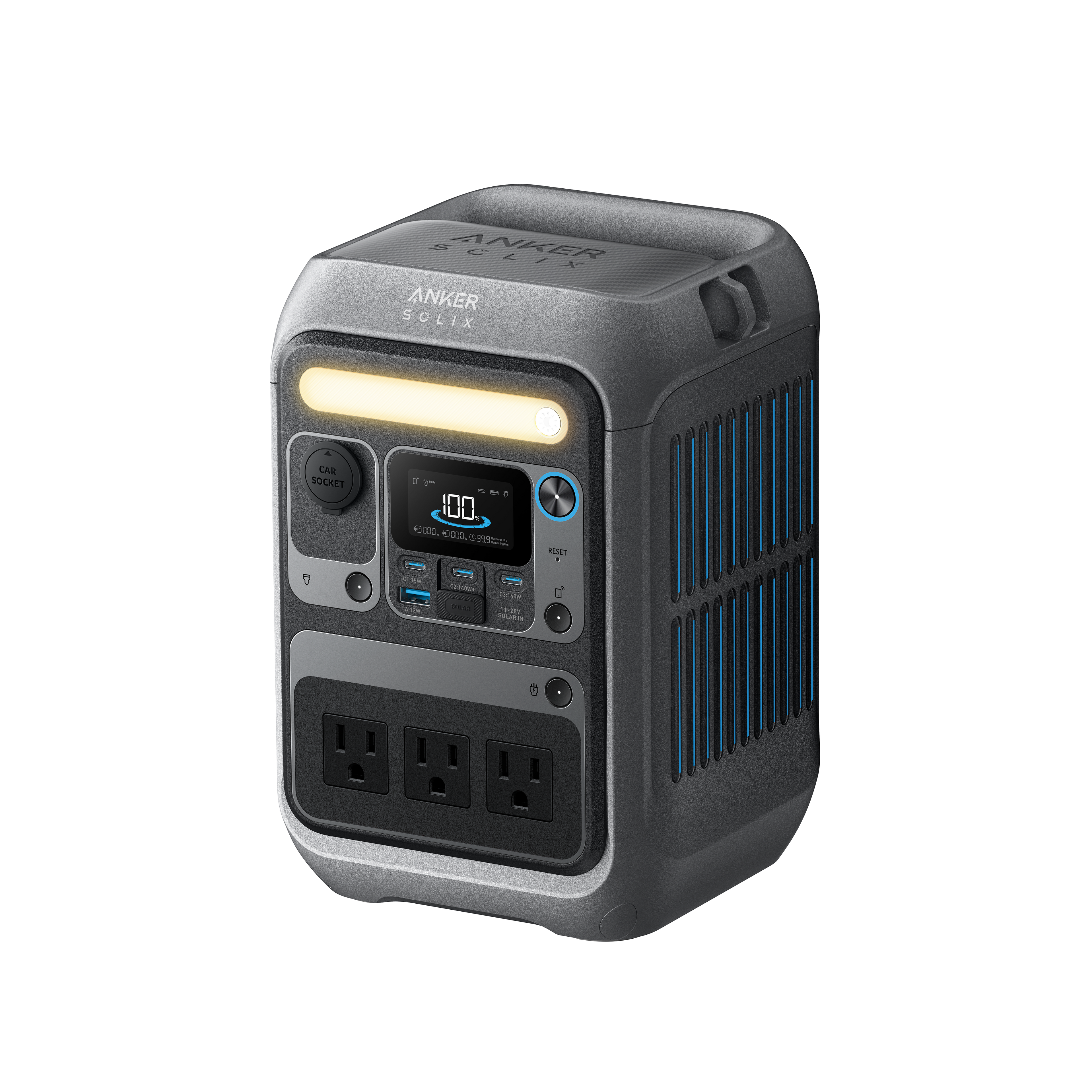
Explore this need in the finder →The Anker SOLIX C300 is a small, 288 Wh station built around ordinary 120 V outlets and a modest 300 W continuous AC ceiling. Its US model is A1722 and its standalone SKU is A17221Z1. It weighs 9.1 lb, adds a 12 V car socket and fast USB-C ports, and can recharge from AC, solar, a vehicle or USB-C. The crucial choice is whether AC power matters: if your gear already accepts DC or USB, the lighter C300 DC is a different and more port-rich design rather than simply a smaller version.
What 300 W means in practice
The C300 has three 120 V AC receptacles, but they share one inverter rated at 300 W. Anker also advertises SurgePad up to 600 W. The higher number is not a continuous rating: the manufacturer describes it as a feature for selected high-wattage loads, says it works better with heating appliances, and warns that it is unsuitable for precision equipment or devices with strict voltage protection. It also does not work in bypass mode. Treat 300 W as the reliable planning ceiling and separately check startup demand, operating cycles and the equipment maker’s voltage requirements.
Capacity is likewise easy to overread. Its 288 Wh LFP battery is a nameplate storage figure, not guaranteed energy delivered at an AC plug. Conversion loss, the station’s reserve, temperature and the actual appliance draw determine the useful runtime. This is a sensible scale for phones, cameras, a laptop, lights, a small fan or a carefully sized low-draw load; it is not a long-duration refrigerator or heater supply. List each device’s watts and hours first. If that sum leaves little reserve, step up to a larger station rather than treating the SurgePad figure as extra energy.
AC outlets with an unusually small footprint
At 9.1 lb and about 6.5 × 6.3 × 9.5 in, the C300 is easier to move than a home-backup unit, although it is still bulkier and heavier than the DC-only C300. Three AC outlets can be convenient at a campsite, tailgate or work table where several wall-plug devices need power. The manual lists a total AC output of 300 W in both inverter and bypass modes; plugging several devices into different sockets does not multiply that limit.
The station also has two USB-C ports rated up to 140 W, one 15 W USB-C port, one 12 W USB-A port and a 12 V/10 A car-style socket rated at 120 W. The small USB-C and USB-A outputs share a 20 W ceiling. Each port’s headline maximum is not a promise that every connected port can reach its individual maximum simultaneously. If your main plan is a cluster of laptops and phones, compare the C300 DC: it has four USB-C ports and two USB-A ports while weighing 6.17 lb, but no AC inverter at all.
Recharge routes and limits
For wall charging, Anker lists up to 330 W AC input and advertises 80% in 50 minutes; that is a manufacturer charging claim, not a measured result here. The solar port accepts up to 100 W, with an 11–28 V window and 8.2 A maximum. A compatible panel and cable must stay within the voltage range; exceeding it can damage the station. Anker’s guide says USB-C recharge is up to 140 W through USB-C2. Solar/XT60 and USB-C charging cannot be used simultaneously because the covered input layout prevents it. The standalone box list includes an AC charging cable, while the manual says the solar and car charging cables are separate purchases. Confirm the exact package contents rather than assuming a panel or vehicle cable is included.
There is also a manufacturer-listed 10 ms UPS transfer feature when connected as directed. That may be useful for compatible small electronics, but it is not an independent transfer test or a guarantee for a particular computer, aquarium pump or medical device. Check the powered device’s requirements and test the exact setup before relying on it. The manufacturer product page lists LFP chemistry, more than 3,000 cycles to 80% and a five-year warranty; these are published specifications, not a durability test by this guide.
Who should choose it?
Choose the C300 if your essential plan needs actual 120 V sockets, stays below 300 W continuous, and benefits from the combination of a 12 V outlet and fast USB-C without carrying a much larger station. Its questionnaire answers matter: a required 120 V output or household AC outlet keeps it in consideration; a direct-DC-only answer correctly removes it. A 140 W USB-C minimum and a 100 W solar minimum fit, while a 301 W continuous AC floor or a 101 W solar-input floor does not.
Choose the C300 DC instead when four USB-C ports, two simultaneous 140 W USB-C recharge inputs, lower carry weight or a built-in retractable light matter more than AC sockets. It cannot run AC-only equipment, however many adapters you carry. If a device needs more than 300 W continuous, or a fridge, medical setup or outage plan needs more stored energy, compare the EcoFlow RIVER 3 Plus for 600 W AC output or a larger-capacity station; neither nameplate rating alone settles runtime or compatibility. The checked Anker US listing showed the C300 as sold out, so this review does not imply current stock. No physical sample or independent electrical test was used; check the current exact-SKU listing and manual before purchase.
Key details at a glance
| Nameplate battery capacity | 288 Wh |
|---|---|
| Rated AC output | 300 W |
| Manufacturer surge rating | 600 W |
| Maximum solar input | 100 W |
| Maximum USB-C output per port | 140 W |
| Listed weight | 9.1 lb |
| Compatible extra-battery expansion | No |
| 12 V DC output | 120 W |
| Maximum AC recharge input | 330 W |
| Manufacturer UPS transfer figure | 10 ms |
| Base warranty term | 5 years |
| AC outlet output | Yes |
| USB-C ports | 3 |
| USB-A ports | 1 |
| Solar input ports | 1 |
| 12 V car-style output | 120 W |
| Battery chemistry | LFP |
Use the exact model’s instructions for operating limits, supplied equipment and version differences.
Sources for this assessment
A useful match starts with the loads that matter.
Use the finder for hard electrical requirements, then check appliance starting behavior, actual run time and the exact package in the full assessment.