
Your needs, this model
Does it fit your priorities?
Is a single 120 V station with at least 2,560 Wh and 2,400 W continuous enough for your essential loads?
The standalone A1781 plan has 2,560 Wh nameplate capacity and a 2,400 W continuous AC rating at 120 V. The 2,800 W surge is not a continuous-load allowance, and capacity is not a measured runtime.
Explore this need in the finder →Will you recharge from solar with the station lead, while sourcing the panel separately?
The manual lists a solar charging cable for the standalone station and the U.S. offer is No Panel. Solar input is rated up to 1,000 W within the manual voltage/current limits; the required panel is a separate purchase.
Explore this need in the finder →Can a 69.7 lb wheeled station with a 120 V TT-30 output fit your placement and load plan?
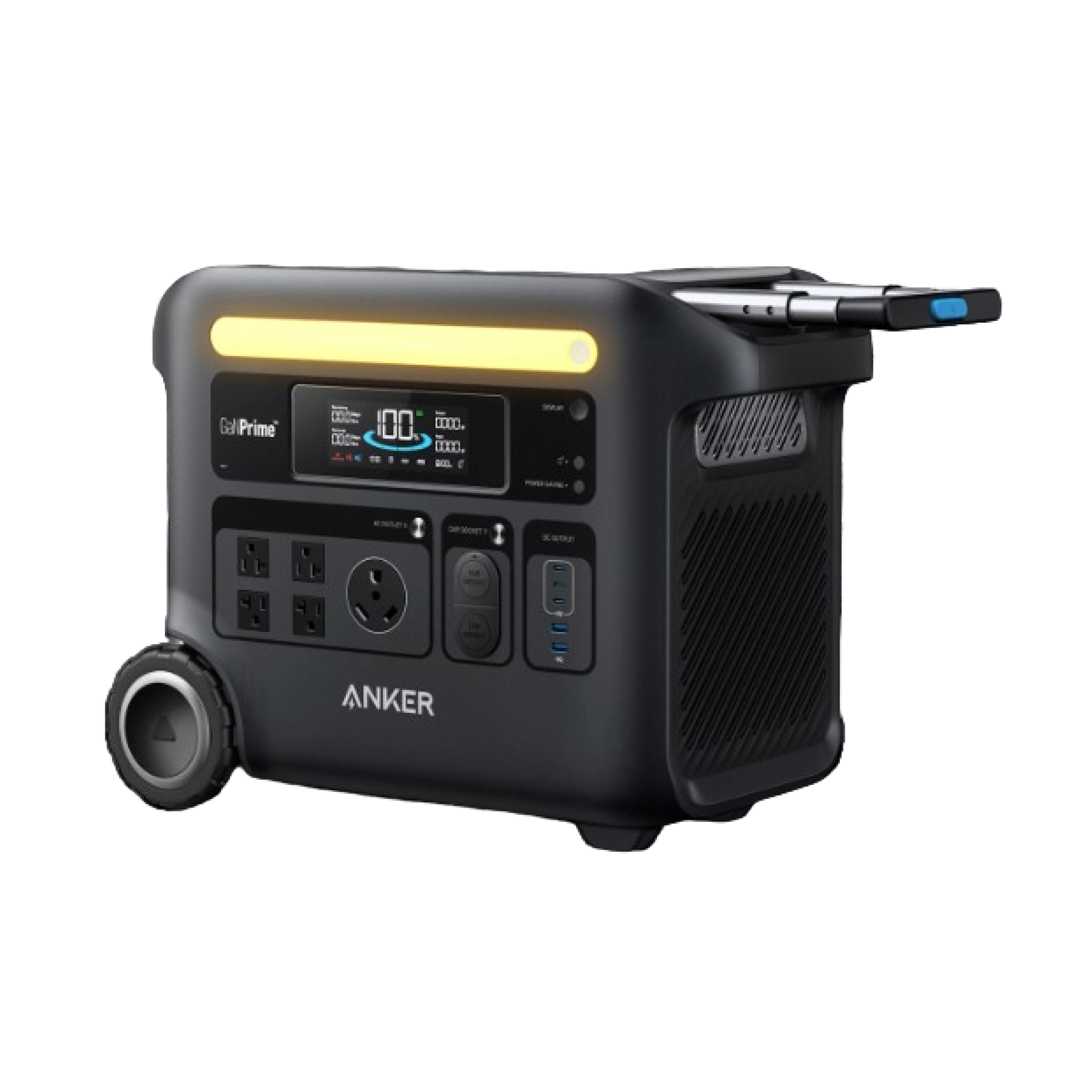
The station itself weighs 69.7 lb, has one 120 V inverter rated at 2,400 W continuous, and includes a TT-30R; the connector does not create a 30 A station ceiling.
Explore this need in the finder →This assessment covers the standalone Anker SOLIX F2600, model A1781 and U.S. SKU A1781111, not a package with an expansion battery. The exact U.S. page identifies 2,560 Wh and 2,400 W; its selected listing was the No Panel version and its captured availability label said Sold Out. The F2600 can also appear in separate bundle offers, but those are different configurations: the 5,120 Wh B178111L review, for example, includes a BP2600. Do not read that bundle's stored capacity or carton uncertainty into this single-station profile.
One station, one 120 V inverter
The A1781 is a lithium iron phosphate (LFP) station rated at 2,560 Wh nameplate capacity. That is stored battery capacity, not a guarantee of the energy an AC appliance will receive. Conversion losses, idle draw, temperature and how a device cycles all change runtime; no measured result or load-specific AC-delivered-energy figure is available here. Anker states 3,000 cycles to 80% or more capacity and provides a five-year warranty in the reviewed U.S. materials. Those are manufacturer claims and terms, not independent cycle or longevity testing.
Anker lists 2,400 W continuous output and 2,800 W surge from its 120 V inverter. Four household receptacles and one TT-30R share that station-wide limit. A TT-30-shaped connector does not turn the F2600 into a 30 A source: 2,400 W at 120 V is about 20 A before considering other simultaneous loads. Check appliance startup needs as well as steady draw. This single-station plan does not provide 240 V or split-phase output, so it cannot directly meet equipment that requires either.
The U.S. page is inconsistent about outlet type: its visible specs say NEMA 5-20, its structured field says NEMA 6-20 at 120 V, and the A1781 manual says only NEMA-20R. If the blade pattern matters, ask Anker to confirm it; this review does not resolve the subtype.
Large reserve, but not a light carry
The station is listed at 69.7 lb (31.6 kg). Its wheels and pull handle make rolling a more sensible routine than lifting it repeatedly, but the body is still heavy for stairs, a long walk, or frequent transfers between a car and campsite. Treat it as a car-supported, garage, or stationary backup unit unless you have a realistic way to move it. The manufacturer manual also directs users to keep it dry and follow the storage and operating-temperature guidance; the materials reviewed do not establish an IP weather-resistance rating.
Its 2,560 Wh reserve is useful when a load plan needs more stored energy than a compact weekend unit, and its 2,400 W continuous AC ceiling is substantial for one 120 V inverter. Those numbers do not mean that every household load can be combined. Add the running watts of devices you would use together, account for compressor or motor start-up, and keep the sum below the continuous rating. Surge headroom is brief and not a second operating mode.
Charging routes and what is actually in the box
Anker rates solar input up to 1,000 W. The A1781 manual gives 11–32 V / 10 A and 32–60 V / 20 A bands within that ceiling; it also lists AC input up to 1,440 W and a 120 W vehicle-charge route. Those are not guaranteed recharge times. Solar and vehicle charging use the station input; do not assume they operate together. Match a panel's voltage, current and connector to the manual, not wattage alone.
The F2600 standalone manual's box list names AC, solar and car charging cables and an accessories bag. The selected standalone store option is No Panel: a solar panel is not included. That is different from the B178111L package page, which does not publish a complete bundle carton list; the standalone cable list should not be treated as proof of the contents of every F2600 bundle. If you need a station-side solar lead, the standalone manual does list one. Confirm the exact package contents on the offer you are evaluating.
Features and limits that affect a real plan
The product materials describe app connectivity and a UPS switch time below 20 ms. The manual explains setup and bypass/UPS use, but also warns against relying on the station for medical, life-safety or other high-risk equipment. A transfer-time claim is not a guarantee that a particular load will ride through an outage. For small continuously connected electronics, review the manual's power-saving behavior and disable the feature if a low-draw device must remain on; then verify operation in a noncritical setting.
The manual specifies charging from 32–104°F (0–40°C) and discharging from −4–104°F (−20–40°C), and says to keep the unit dry. Its wheels and handle do not make it weatherproof; the reviewed materials give no IP rating.
Which choices change the decision?
Choose this profile for a 120 V plan needing up to 2,560 Wh nameplate and no more than 2,400 W continuous, if 69.7 lb is manageable and you can source a panel separately. Expansion is a separate configuration, not included with this station-only offer. For 5,120 Wh, see the reviewed F2600-plus-BP2600 package; its battery does not raise the 2,400 W inverter limit. A need for 240 V, higher continuous output, a panel in-box, or a lighter carry points elsewhere.
For exact ratings and safe setup, consult Anker's U.S. F2600 product page and A1781 user manual. The U.S. page was marked Sold Out in the captured 2026-10-24 snapshot; availability can change, so this article makes no present-stock or price claim.
Key details at a glance
| Nameplate battery capacity | 2560 Wh |
|---|---|
| Rated AC output | 2400 W |
| Manufacturer surge rating | 2800 W |
| Maximum solar input | 1000 W |
| Maximum USB-C output per port | 100 W |
| Listed weight | 69.7 lb |
| Compatible extra-battery expansion | Yes |
| 12 V DC output | 120 W |
| Maximum AC recharge input | 1440 W |
| Base warranty term | 5 years |
| AC outlet output | Yes |
| USB-C ports | 3 |
| USB-A ports | 2 |
| Solar input ports | 1 |
| 12 V car-style output | 120 W |
| Battery chemistry | LiFePO4 |
Use the exact model’s instructions for operating limits, supplied equipment and version differences.
Sources for this assessment

A useful match starts with the loads that matter.
Use the finder for hard electrical requirements, then check appliance starting behavior, actual run time and the exact package in the full assessment.