
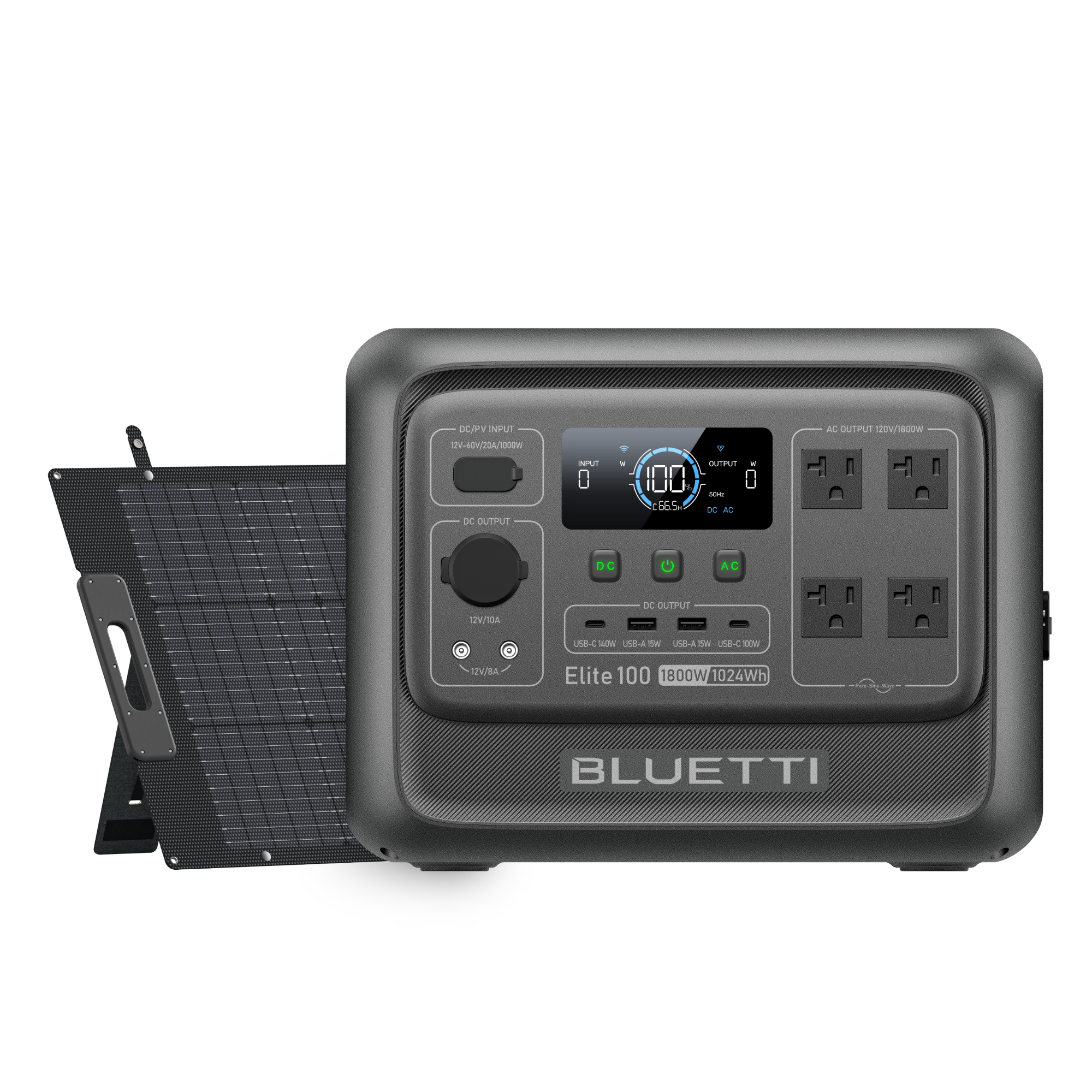
Your needs, this model
Does it fit your priorities?
Is a 200 W panel in the box more important than knowing its model number now?
The exact U.S. option lists one 200 W panel and a solar charging cable, but its artwork and box thumbnail conflict on panel identity. The station’s 1,000 W solar input is known; panel-specific wiring remains a pre-use confirmation.
Explore this need in the finder →Does the 25.3 lb station body fit before you add the panel and cable?
The EL100V2 body is listed at 25.3 lb; this offer’s exact 200 W panel model and complete package weight are not confirmed, so a combined carry limit cannot be promised.
Explore this need in the finder →Would one listed 200 W panel be enough for a starter solar route?
The offer lists one 200 W panel and a solar lead, whereas the station accepts up to 1,000 W at 12–60 V/20 A. The 200 W rating is package-level evidence, not a verified panel manual or daily recharge guarantee.
Explore this need in the finder →This exact U.S. Elite 100 V2 + 200W Solar option pairs the EL100V2 station with one listed 200 W solar panel and the offer’s solar cable. The option record carries retail SKU EL100V2-2-190-SPFUS-00. Its primary bundle art filename names SP200L, while the in-box panel thumbnail is labeled PV200D; the written box line itself says only “200W Solar*1.” BLUETTI’s separate 200 W component page and compatibility material also expose more than one panel identity. Because the selected package does not tie a panel model code to its item list, this assessment uses only the confirmed 200 W package rating and leaves the precise panel submodel unresolved.
More supplied panel, same 1 kWh station
The EL100V2 still stores 1,024 Wh, supplies 1,800 W of rated 120 V AC, weighs 25.3 lb and accepts up to 1,000 W of solar input at 12–60 V and 20 A. The 200 W bundle does not increase any of those station limits. It supplies twice the nameplate panel wattage of the separate 100 W bundle, which can be useful when you want a more substantial solar starting point without sourcing the panel separately. Two hundred watts is still only one fifth of the station’s maximum input figure; a larger array would require its own compatibility and wiring check.
The exact selected page lists one 200 W panel and a PV cable. Its artwork depicts the station and folding panel, and the separate station manual specifies the EL100V2 input envelope. But the page’s naming mismatch matters: the package hero image path says SP200L while an in-box graphic calls the 200 W component PV200D. The panel models are not interchangeable labels merely because the headline wattage matches. Do not carry a specific panel manual’s voltage, current, temperature behavior or weight into this package without a written confirmation of what is being shipped. Before a trip where solar input is essential, confirm the panel part number, its electrical ratings, included lead and any cold-weather limitations with BLUETTI. The station’s own input limits remain known; the exact panel component bridge does not.
Who benefits from the 200 W version?
For a buyer comparing the two Elite 100 solar bundles, the decision is straightforward at the package-rating level: the +100W offer lists one 100 W panel, while this offer lists one 200 W panel. Choose this version if the extra nameplate panel capacity is worth the added panel mass and you are willing to resolve its exact part number before depending on the solar path. It is not the right selection if you need the panel model, cold-corrected voltage, exact connector or complete kit weight established before purchase. In that case, a standalone EL100V2 with a panel selected and verified separately—or the clearly identified +100W SP100L bundle—may be easier to document.
The station itself is more suitable for a small outage reserve or vehicle-based camp than a tiny power bank: 1,024 Wh and 1,800 W can cover a broader load list, but nameplate energy is not delivered energy and no runtime was measured for this review. Check a refrigerator, pump or power tool’s startup demand. BLUETTI’s Power Lifting figure is for certain pure-resistive loads and is not a universal substitute for rated inverter output. If your actual loads exceed 1,800 W continuously, require 240 V, or need more than 1,024 Wh before recharge, a 200 W panel does not correct those constraints.
Carry and setup are part of the choice
The official panel reference page lists SP200L at 17.15 lb, but the offer’s component-code mismatch prevents assigning that weight to this specific bundle. The EL100V2 body alone is 25.3 lb; do not quote a combined kit total until BLUETTI identifies the included panel and confirms its mass. In practical terms, a folding 200 W panel will take more space and setup than the 100 W package’s SP100L. It is a better fit near a vehicle, van or fixed emergency location than a plan that requires carrying all components far from a trailhead.
Panel performance is not just a number on a label. The surface needs good sun, suitable orientation and clear space; shade or a poor angle can reduce input. The product page does not promise an actual 200 W delivery in everyday conditions. The 1,000 W station ceiling is an upper input limit, not a charge-rate estimate for this bundle. Keep the station dry, use the exact supplied cable and follow the manual once the component identity is confirmed.
How answers change the recommendation
Requiring a 120 V AC station and at least 1,800 W output does not distinguish this bundle from the standalone Elite 100 V2; requiring solar input and a panel in the package does. A 200 W minimum panel threshold fits the selected option’s written contents, while a threshold above 200 W does not. A 1,000 W minimum solar input tests the station’s published input ceiling, not the panel output. A maximum station weight below 25.3 lb excludes the body; a maximum for the complete carried kit cannot be verified from the published component information. These are separate questions, and conflating them can produce an attractive but unworkable solar plan.
The package is potentially useful to someone who wants a 1,024 Wh/1,800 W station with a 200 W panel supplied. Its main caution is not the station’s rating; it is the unconfirmed exact panel identity. Ask the seller to confirm the panel model and current package contents in writing before relying on any model-specific connection plan. That makes this assessment a fair comparison of the sold option without pretending the component conflict has been solved.
Key details at a glance
| Nameplate battery capacity | 1024 Wh |
|---|---|
| Rated AC output | 1800 W |
| Maximum solar input | 1000 W |
| Included panels, combined nameplate | 200 W |
| Maximum USB-C output per port | 140 W |
| Listed weight | 25.3 lb |
| 12 V DC output | 120 W |
| Maximum AC recharge input | 1200 W |
| Manufacturer UPS transfer figure | 10 ms |
| AC outlet output | Yes |
| USB-C ports | 2 |
| USB-A ports | 2 |
| Solar input ports | 1 |
| 12 V car-style output | 120 W |
| Battery chemistry | LiFePO4 |
| Solar panels in exact offer | 1 |
Use the exact model’s instructions for operating limits, supplied equipment and version differences.
Sources for this assessment
- BLUETTI U.S. exact selected package option: BLUETTI Elite 100 V2 + 200W Solar
- BLUETTI US Elite 100 V2 support and downloads page
- Elite 100 V2 User Manual, English US edition (cover marked V5.1)
- BLUETTI U.S. nominal SP200L product page reviewed for conflict only
- BLUETTI linked one-page 200W guide reached from nominal SP200L route
- BLUETTI U.S. PV200D support/download lead checked for exact model distinction
A useful match starts with the loads that matter.
Use the finder for hard electrical requirements, then check appliance starting behavior, actual run time and the exact package in the full assessment.