
Your needs, this model
Does it fit your priorities?
Would one included 5 kWh battery added to the Classic suit the energy duration you need?
TTC-EB has two listed 5,017.6 Wh LFP units, or 10,035.2 Wh nameplate capacity. This does not guarantee delivered AC energy or a runtime.
Explore this need in the finder →Do you need the Classic’s 120 V output and its TT-30R receptacle?
The Classic is a 120 V-only 4,000 W unit with a listed TT-30R. The expansion battery does not add 240 V capability.
Explore this need in the finder →Is at least 3,200 W solar input essential for this 120 V plan?
EcoFlow lists one 3,200 W PV input for the Classic; panels are a separate configuration, not named in TTC-EB.
Explore this need in the finder →Extra storage does not make the Classic a 240 V station
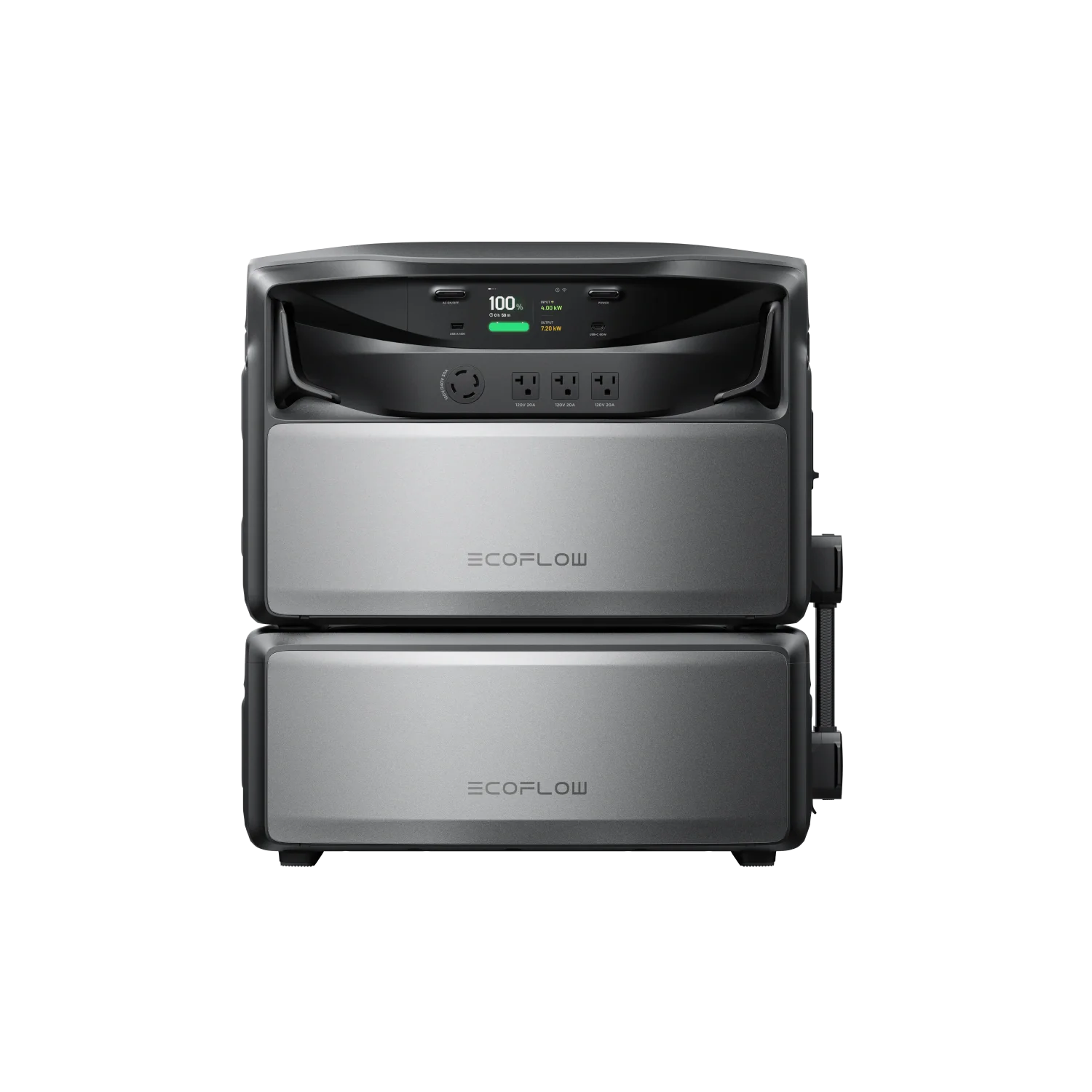
EcoFlow’s U.S. product option “TITAN 5000 Classic + TITAN Battery” is bundle SKU TTC-EB, variant 55913028911177. The saved October 25, 2026 option data marked this exact selection unavailable. This review is for the Classic station plus one TITAN battery, not for the standalone EFTITANC-US SKU, the TT-DEPOSIT coupon, or a separate Smart Home Panel offer. Confirm the current selected variant and seller contents if the bundle returns to stock.
The Classic main unit is the deciding part. Its listed AC output is 4,000 W at 120 V only; the extra battery does not turn it into a split-phase, 240 V system or add another inverter. The unit provides three NEMA 5-20R outlets and one TT-30R. That can suit a 120 V backup plan with a compatible RV-style connection, but it cannot satisfy a 240 V appliance requirement. A larger battery helps with duration for supported loads; it does not relax the 4,000 W output ceiling or the appliance’s startup needs.
About 10 kWh of nameplate energy, with a lower solar ceiling
EcoFlow lists each TITAN unit and the TITAN 5 kWh Battery at 5,017.6 Wh. With one battery in TTC-EB, the two-unit plan totals 10,035.2 Wh of nameplate LFP capacity. That is not the same as AC energy delivered to appliances. Conversion, the reserve setting, temperature and duty cycle matter; no runtime or load test was performed. The selected option includes one battery, not the five extras that EcoFlow says can expand a TITAN system to 30 kWh.
The Classic’s solar input is also more modest than the other TITAN models: EcoFlow lists one 3,200 W input with a 30–250 V range and a 16 A limit. Before building an array, check panel series voltage (including cold-weather open-circuit voltage) and current against those limits, and account for shade and seasonal sunlight. This option names a battery rather than panels. The separate 220 W and 400 W panel offers are distinct configurations; neither panel quantity is credited to TTC-EB.
Compare the connection plan before the capacity
The Classic is the right TITAN branch only when your essential equipment is 120 V and fits a 4,000 W rating. Its TT-30R may be useful for a properly matched 120 V RV load, while its USB-C and USB-A ports are listed at 60 W and 18 W. If 240 V is a hard need, the standard TITAN 5000 or TITAN 5000 Plus has split-phase output; compare their connector layouts and charging ceilings rather than assuming the Classic’s larger battery solves the mismatch. The Classic should be chosen for its 120 V use case, not because a promotional headline calls the family a whole-home battery system.
TTC-EB does not identify the Smart Home Panel 10 (120 V) as included. The product page offers a separate SHP10 configuration. If your plan depends on automatic circuit transfer or a wired home setup, confirm the exact compatible panel package, installation requirements, circuit count and local-code details with a qualified installer. A battery bundle without that hardware does not automatically back up house wiring. Do not backfeed a home circuit from a receptacle.
Use the corrected component weight and allow for safe handling
The Classic’s page contains a weight discrepancy: its technical table gives 46.5 kg and 102.5 lb, while a comparison table pairs the same 46.5 kg with 110.2 lb. The kilogram conversion supports 102.5 lb, so this assessment uses that figure and preserves the discrepancy rather than repeating the arithmetic error. The TITAN Battery is listed separately at 82.7 lb (37.5 kg). Those component figures sum to about 185.2 lb for the two-unit plan, not a verified packaged weight. The assembly still needs deliberate placement and handling; it is not a portable campsite load-in for most people.
EcoFlow lists IP20 for these units, not weatherproof protection, and specifies charging from 32°F to 113°F and discharge from 14°F to 113°F. Keep the equipment protected and ventilated. The exact option thumbnail is a manufacturer rendering of a Classic station with one battery; it is not a sample photograph or proof of a particular shipment. Accessory cables, gross package weight and the installation guide’s wiring detail remain unknown for TTC-EB.
Who should consider TTC-EB?
This bundle belongs on a shortlist when you need a longer-duration 120 V backup plan, value the listed TT-30R and want one compatible 5 kWh battery in the exact option. Compare the simpler standalone Classic if 5 kWh is sufficient and you would rather keep the initial equipment smaller. Move to standard TITAN when a 240 V load is essential or 7,200 W and the 4 kW solar input better fit your plan; choose Plus for its 8 kW dual-input solar architecture only if your array can use it. Those alternatives are different devices, not capabilities added by TTC-EB.
Size the setup from the loads that must run together, their startup requirements and how long you need them. The 10,035.2 Wh nameplate sum is not a runtime guarantee. EcoFlow lists a five-year warranty for the Classic and battery in its technical table; verify exact terms and the current package before buying. This assessment relies on manufacturer information, not hands-on testing.
Manufacturer reference: EcoFlow U.S. TITAN 5000 Classic product page. Verify TTC-EB, its current availability, and the exact seller contents before purchasing.
Key details at a glance
| Nameplate battery capacity | 10035.2 Wh |
|---|---|
| Rated AC output | 4000 W |
| Maximum solar input | 3200 W |
| Included panels, combined nameplate | 0 W |
| Maximum USB-C output per port | 60 W |
| Listed weight | 102.5 lb |
| Compatible extra-battery expansion | Yes |
| Manufacturer UPS transfer figure | 20 ms |
| Base warranty term | 5 years |
| AC outlet output | Yes |
| USB-C ports | 1 |
| USB-A ports | 1 |
| Solar input ports | 1 |
| Battery chemistry | LFP |
| Ingress rating | IP20 |
| Expansion battery in this package | Yes |
| Home Power Panel in this package | No |
| HPP 120/240 V split-phase | No |
| Smart Transfer Switch in this package | No |
| Solar panels in exact offer | 0 |
Use the exact model’s instructions for operating limits, supplied equipment and version differences.
Sources for this assessment

A useful match starts with the loads that matter.
Use the finder for hard electrical requirements, then check appliance starting behavior, actual run time and the exact package in the full assessment.