
Your needs, this model
Does it fit your priorities?
Is 120 V-only output enough for every appliance in your emergency plan?
Classic is specified as 120 V single-phase and the page explicitly says it does not support 240 V appliances. The larger two TITAN 5000 models provide the 120/240 V option.
Explore this need in the finder →Would you use a documented TT-30R in an RV or 120 V backup setup?
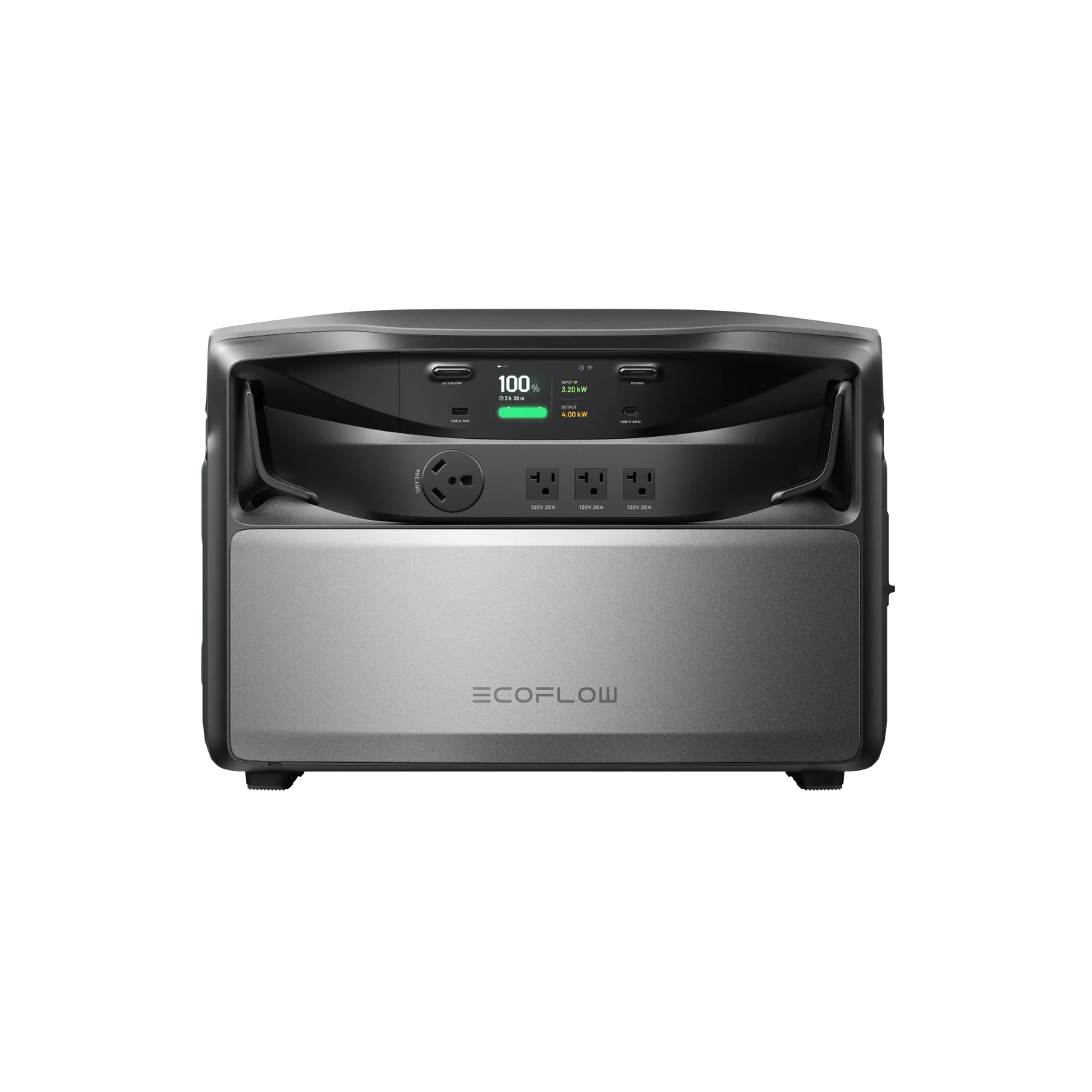
The spec table lists one TT-30R alongside three 5-20R receptacles. That connector label does not establish the exact current available at the port; verify the current limit against the RV’s loads.
Explore this need in the finder →Do you need more than 3,200 W of solar input?
Classic’s published solar-input ceiling is 3,200 W on one port. If your array plan requires more, the TITAN 5000 lists 4,000 W and the Plus lists 8,000 W.
Explore this need in the finder →Classic is the 120 V model, not a smaller split-phase Titan
EcoFlow’s U.S. page identifies the standalone TITAN 5000 Classic as SKU EFTITANC-US (variant 55913028878409). In the October 25, 2026 capture, that exact station option was unavailable. A separately available $50 TITAN Series Coupon, SKU TT-DEPOSIT, is a promotion and not the station. The base review does not include the separate TITAN battery, Smart Home Panel or panel bundles. Confirm an actual standalone station SKU and current offer rather than treating the coupon as equipment.
The key decision is simple and consequential: Classic is specified for 120 V single-phase AC only. Its 4,000 W rating cannot serve a 240 V appliance, whether that is an air conditioner, electric range or another load that requires split-phase power. EcoFlow points shoppers needing 240 V toward the TITAN 5000 or 5000 Plus. If your essential circuit list is all 120 V, Classic may provide enough output; if a single essential appliance requires 240 V, it is a hard mismatch.
One battery unit, with an expansion path
The base station stores 5,017.6 Wh of LFP nameplate capacity. EcoFlow says a TITAN system can be expanded to 30 kWh using as many as five extra TITAN batteries. The reviewed EFTITANC-US option is the starting station, not that larger multi-battery configuration. Extra batteries can increase stored energy and the time a load may run, but they do not turn Classic into a 240 V product or increase its 4,000 W inverter rating. Delivered AC energy will be lower than nameplate capacity and varies with load, reserve settings, temperature and conversion loss.
The Classic lists one solar input rated up to 3,200 W at 30–250 V and 16 A. It is the smallest solar ceiling in this family: the standard TITAN 5000 lists 4,000 W, while Plus lists 8,000 W over two MPPT inputs. A compatible array has to stay inside the exact input limits; do not build a string around panel wattage alone. The base package page lists a Solar-to-HP500 cable, while solar panels are separately sold or offered in other variants. The free-panel promotion is not proof that the standalone SKU’s box includes a panel.
Useful connectors, with one caveat
EcoFlow lists three NEMA 5-20R outlets, one NEMA TT-30R, a 60 W USB-C and an 18 W USB-A. The TT-30R can be useful for a compatible 120 V RV connection, but the receptacle name alone does not confirm the current available from that output. Match the manufacturer’s port rating and the RV’s combined loads rather than assuming the full nominal TT-30 current. A direct connection plan and a hardwired backup plan are also different: the page lists a 120 V Smart Home Panel 10 option for selected household circuits, but that panel is not part of the standalone station SKU.
One published weight discrepancy deserves attention before moving it. EcoFlow’s technical-spec table gives the base station as 46.5 kg and 102.5 lb, which is a consistent conversion. A comparison chart pairs the same 46.5 kg with 110.2 lb, which is not the same weight. This review uses 46.5 kg / about 102.5 lb and preserves the inconsistency rather than silently choosing the larger pound figure. At either interpretation it is a heavy home unit, not a light camping power bank.
Backup transfer and daily setup are package-dependent
EcoFlow’s page describes a Smart Home Panel 10 setup with a switchover claim of up to 20 ms and limits that panel option to 120 V for Classic. That claim belongs to the installed configuration, not a test of every appliance or an independent guarantee that lights or electronics never blink. The panel and any required installation are separate from the base station. The official page lists an IP20 rating, a five-year warranty and 32°F–113°F charging / 14°F–113°F discharge temperature limits; follow current manufacturer instructions for placement and use.
Who should select it
Classic is for an owner whose actual plan is 120 V only, who values the 4,000 W rating, onboard TT-30R and USB ports, and who can manage the roughly 100-pound station. It is a poor choice for 240 V loads, a wet outdoor site or a person expecting a grab-and-go unit. The standard TITAN 5000 is the more appropriate comparison if you need split-phase output; Plus is the solar-heavy alternative. No runtime, acoustic, starting-load, transfer or installation testing was performed here. Size from the nameplate and your real load list, then check the current option and documentation before purchase.
Manufacturer reference: EcoFlow U.S. EcoFlow TITAN 5000 Classic product page. Confirm the exact standalone option, current availability and manual before purchase or installation.
Key details at a glance
| Nameplate battery capacity | 5017.6 Wh |
|---|---|
| Rated AC output | 4000 W |
| Maximum solar input | 3200 W |
| Maximum USB-C output per port | 60 W |
| Listed weight | 102.5 lb |
| Compatible extra-battery expansion | Yes |
| Manufacturer UPS transfer figure | 20 ms |
| Base warranty term | 5 years |
| AC outlet output | Yes |
| USB-C ports | 1 |
| USB-A ports | 1 |
| Solar input ports | 1 |
| Battery chemistry | LFP |
| Ingress rating | IP20 |
| Expansion battery in this package | No |
| Home Power Panel in this package | No |
| HPP 120/240 V split-phase | No |
| Smart Transfer Switch in this package | No |
Use the exact model’s instructions for operating limits, supplied equipment and version differences.
Sources for this assessment

A useful match starts with the loads that matter.
Use the finder for hard electrical requirements, then check appliance starting behavior, actual run time and the exact package in the full assessment.