
Your needs, this model
Does it fit your priorities?
Would one included 5 kWh battery added to the Plus station suit the energy duration you need?
TTP-EB pairs the 5,017.6 Wh TITAN Plus with one 5,017.6 Wh TITAN Battery for 10,035.2 Wh nameplate capacity. It does not promise that much delivered AC energy or a fixed runtime.
Explore this need in the finder →Do you require 240 V and at least 7.2 kW of battery-rated AC output?
The TITAN 5000 Plus is listed for 120/240 V split-phase output at 7,200 W. The battery adds energy storage, not another inverter.
Explore this need in the finder →Is an 8,000 W solar-input ceiling essential, with the panels chosen separately?
EcoFlow lists two 4,000 W MPPT inputs, 8,000 W total for the Plus. The TTP-EB name identifies a battery bundle, not a solar-panel bundle.
Explore this need in the finder →The TTP-EB option is a two-battery TITAN Plus system
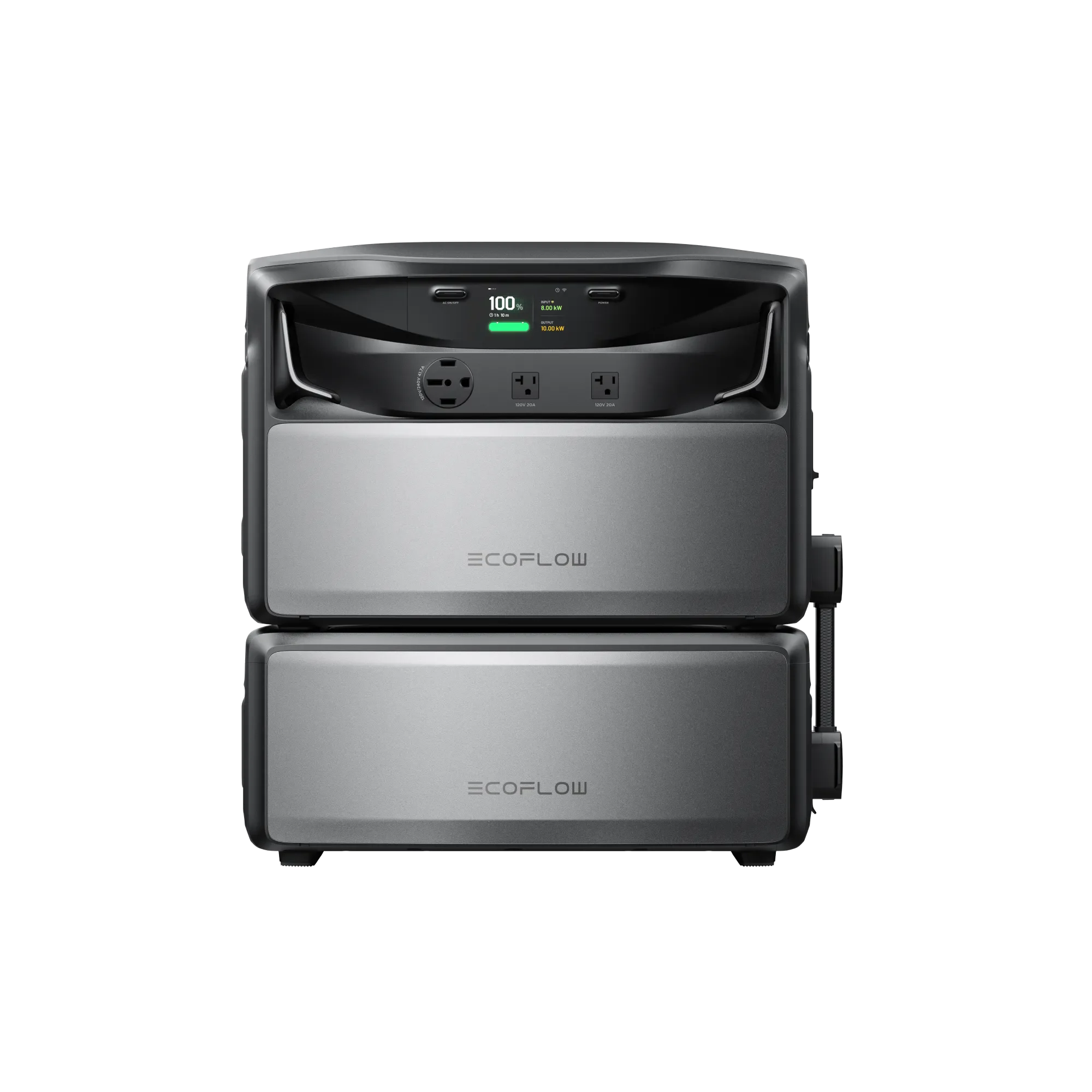
This review covers EcoFlow’s U.S. TITAN 5000 Plus option “TITAN 5000 Plus + TITAN Battery,” bundle SKU TTP-EB, variant 55912999977033. The saved October 25, 2026 option data marks that exact selection unavailable. It is not the standalone EFTITANP-US SKU, and it is not a solar-panel or Smart Home Panel package. Check the selected variant, seller and included components again before purchase; the page’s coupon or launch promotion is a separate transaction.
The battery solves duration; Plus solves solar-input headroom
EcoFlow lists 5,017.6 Wh for the TITAN 5000 Plus and 5,017.6 Wh for its TITAN 5 kWh Battery. This one-battery option therefore has 10,035.2 Wh of nameplate storage. That extra stored energy can extend a suitable backup plan, but does not double the Plus inverter: its battery-rated AC output remains 7,200 W at 120/240 V split phase. The manufacturer separately advertises up to 10 kW when solar and battery power contribute together. Do not budget for 10 kW from the battery alone, infer exact runtime from nameplate watt-hours, or treat the separate battery as a second AC output source. Conversion losses, reserve settings and the actual loads govern delivered energy.
The Plus distinction is its charging architecture. EcoFlow lists two 4,000 W MPPT solar inputs, 8,000 W total, and separately advertises PV Boost. This can matter when a permanent array is large enough to justify a more substantial controller and wiring plan. It is not a reason to buy an oversized array blindly: each input still has manufacturer voltage and current limits, and seasonal production depends on orientation, shade and weather. TT-EB does not name solar panels as included. The product page has separate two-panel options; do not turn the battery bundle into one of those by inference.
Think in circuits, not one headline wattage
The Plus unit is specified for 120/240 V output. Its listed outlets are two 5-20R receptacles and one L14-50R; EcoFlow’s product comparison lists no onboard USB ports. Plan each critical load’s connector, running watts and starting demand, then confirm that the devices you intend to operate at the same time fit within the system’s limits. A home with both ordinary 120 V essentials and a compatible 240 V load is a different use from a travel setup built around USB-C and a small car socket. This is large home-backup equipment, not a carry-friendly camping station.
Adding the separate TITAN Battery does not add a household transfer switch. The product page identifies the Smart Home Panel 10 (240 V) as a separate option, and TT-EB itself is the battery selection. If you need automatic backup for chosen circuits or AC coupling to rooftop solar, assess the exact panel, protection and wiring arrangement separately with an installer who can check local requirements. No outlet-to-house backfeed or improvised cord is a safe substitute. The manufacturer’s panel/transfer claims apply to that installed configuration, not simply to owning a battery bundle.
Make room for more than 200 pounds of equipment
EcoFlow lists the Plus main unit at 121.3 lb (55 kg) and the TITAN 5 kWh Battery at 82.7 lb (37.5 kg). Their component weights total about 204 lb for this two-unit plan; that arithmetic is not a published shipping weight, and it excludes packaging or any separately selected hardware. Check the equipment route, final location and handling plan before ordering. The product table gives both units an IP20 rating, so use a protected indoor location and keep airflow clear. Published charging and discharge temperature ranges also apply; this is not outdoor-weatherproof equipment.
The selected bundle’s illustration is EcoFlow CGI of a TITAN Plus stacked with an extra battery. It identifies the configuration, not a physical sample, installation, or proof of what a particular seller ships. The archived option does not settle the exact cable/accessory bill of materials, gross package weight, or current inventory. Those details remain purchase checks rather than assumed facts.
Who benefits from TTP-EB?
Choose this configuration only if both its 120/240 V output and its higher solar-input ceiling serve your plan, and you want a second 5 kWh module included now. Compared with the standard TITAN 5000 plus its battery, the Plus accepts twice the listed solar input and adds the manufacturer’s battery-plus-PV output feature, but it gives up direct USB ports and uses a different outlet layout. If the 8 kW input has no real array behind it, the standard TITAN’s 4 kW ceiling may be the simpler fit. If your loads are 120 V only and stay at or below 4 kW, the Classic configuration is the more limited alternative; it is not a substitute when split phase is essential.
Before treating any estimate as a backup plan, list essential loads, starting demands, the hours they must run and the available charging source. The 10,035.2 Wh figure is nameplate storage, not a measured amount of usable AC energy. EcoFlow publishes a five-year warranty for the station and extra battery in its technical table; read the terms that apply to the exact option and seller. No hands-on load, runtime, transfer or installation test was performed for this review.
Manufacturer reference: EcoFlow U.S. TITAN 5000 Plus product page. Verify TTP-EB, its current availability, and exact box contents before purchasing.
Key details at a glance
| Nameplate battery capacity | 10035.2 Wh |
|---|---|
| Rated AC output | 7200 W |
| Maximum solar input | 8000 W |
| Included panels, combined nameplate | 0 W |
| Maximum USB-C output per port | 0 W |
| Listed weight | 121.3 lb |
| Compatible extra-battery expansion | Yes |
| Manufacturer UPS transfer figure | 20 ms |
| Base warranty term | 5 years |
| AC outlet output | Yes |
| USB-C ports | 0 |
| USB-A ports | 0 |
| Solar input ports | 2 |
| Battery chemistry | LFP |
| Ingress rating | IP20 |
| Expansion battery in this package | Yes |
| Home Power Panel in this package | No |
| HPP 120/240 V split-phase | Yes |
| Smart Transfer Switch in this package | No |
| Solar panels in exact offer | 0 |
Use the exact model’s instructions for operating limits, supplied equipment and version differences.
Sources for this assessment

A useful match starts with the loads that matter.
Use the finder for hard electrical requirements, then check appliance starting behavior, actual run time and the exact package in the full assessment.