
Your needs, this model
Does it fit your priorities?
Is an 8,000 W solar-input ceiling useful to your actual array plan?
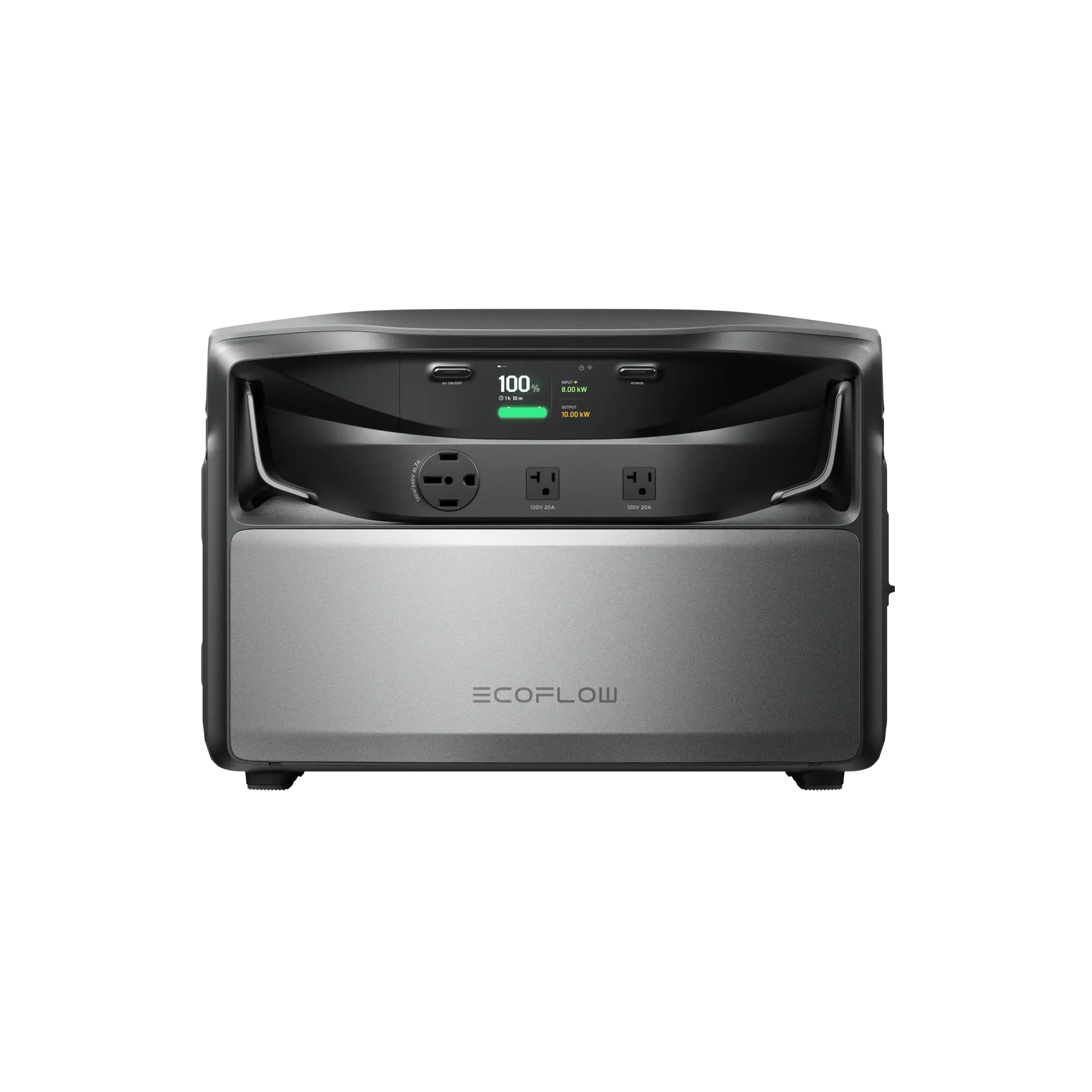
The Plus is the TITAN variant whose page lists two independent 4,000 W MPPT inputs. EcoFlow’s 10 kW PV Boost claim combines solar with battery output; do not treat it as 10 kW available from the battery alone.
Explore this need in the finder →Must this station charge a laptop directly through USB-C?
EcoFlow’s comparison table shows a dash for Plus USB ports. Its AC outlets are separate; include an external USB charger in a supported operating plan or choose the standard/Classic model if onboard USB is essential.
Explore this need in the finder →Would a 120 lb single-unit lifting limit rule this station out?
The manufacturer comparison lists 121.3 lb for the Plus. It is a substantial home-backup unit, not a convenient one-person camping station; plan for a fixed protected location and safe handling.
Explore this need in the finder →Confirm the base station, not the promotion
EcoFlow’s U.S. page names the standalone TITAN 5000 Plus as SKU EFTITANP-US (variant 55912999944265). That exact base variant was marked unavailable in the October 25, 2026 page capture. The page defaulted to a $50 TITAN Series Coupon, SKU TT-DEPOSIT; that is a coupon, not the station. The Plus is a real, separately named station in EcoFlow’s three-model comparison, but check for a current standalone station offer and verify the seller’s exact bundle before purchasing. This assessment covers the 5 kWh base station, not a battery, home-panel or solar-panel package.
The Plus is principally a solar-input upgrade
All three TITAN 5000 models begin with a 5,017.6 Wh LFP battery and the page says each can expand to a manufacturer-claimed 30 kWh with five additional TITAN batteries. Plus does not start with more battery capacity than the standard TITAN. Its case is the solar path: the U.S. specification table lists two 4,000 W MPPT inputs, 8,000 W total, each with its own input limit. That split can be useful if your array is deliberately designed around separate strings, but every string still must meet the station’s voltage, current, connector and environmental requirements.
EcoFlow also describes PV Boost output up to 10 kW and lists a 7.2 kW output rating for the station. Treat those as different operating conditions: the higher advertised figure depends on solar contributing at the time. It is not a 10 kW battery-only rating, and it does not predict what your panels will produce through clouds, shade, winter sun or an imperfect orientation. The page’s claims are manufacturer figures, not independent load testing.
Check the 120/240 V plan and the outlets
The Plus is specified for 120/240 V split-phase operation. EcoFlow’s comparison lists two NEMA 5-20R outlets and one L14-50R. The continuous output is shared across the system, so do not assume the largest receptacle can deliver the entire 7.2 kW rating on top of other simultaneous loads. If a home circuit backup is the plan, EcoFlow lists a 240 V Smart Home Panel 10 configuration; that panel is a separate package choice, and an electrical installation is not replaced by a search result or a portable outlet. Check the actual circuit, transfer arrangement and local installation requirements before treating it as whole-home backup.
A costly trade if you still need USB
The official side-by-side chart shows no USB ports on the Plus. That is a practical difference, not a cosmetic omission: a laptop or small device must use an AC adapter or separate USB charger. The standard TITAN 5000 lists a 60 W USB-C and an 18 W USB-A; Classic lists the same small-device ports but lacks 240 V output. If 240 V is useful but 8 kW of solar is not, the standard model has similar battery-only AC output, more direct small-device convenience and a lower solar ceiling.
The Plus weighs about 121.3 lb (55 kg) in EcoFlow’s U.S. comparison. Its integrated form and substantial weight make it more appropriate for a planned home location than routine camping or vehicle portability. The page also lists IP20; use the product’s current placement guidance rather than assuming a product page image means outdoor weather resistance.
Do not count a bundle as the base station
The archived option list distinguishes the standalone EFTITANP-US from an extra-battery option, a 240 V Smart Home Panel package, and 220 W or 400 W panel bundles. It also lists larger battery-and-panel combinations. Those options change what arrives and, in some cases, how the system is installed. Their names do not establish every panel model, cable, installed weight or selected circuit, so this review does not credit those contents to the base SKU. The product page’s promotional coupon and free-panel language is a separate offer with terms, not proof that a particular station-only box contains panels.
Who gets the benefit from Plus?
Choose Plus when your electrical plan needs 120/240 V, its 7.2 kW battery output fits the load calculation, and the 8 kW dual-MPPT input is a reason you would actually use. Choose the standard TITAN if a single 4 kW solar input is enough and direct USB matters; choose Classic if 120 V only is sufficient and the reduced 3.2 kW solar limit fits. A site-specific load and array design should come before selection. The base unit is not a substitute for an electrician’s panel plan, and no real-world output, runtime, noise or solar test was performed for this assessment.
Manufacturer reference: EcoFlow U.S. EcoFlow TITAN 5000 Plus product page. Confirm the exact standalone option, current availability and manual before purchase or installation.
Key details at a glance
| Nameplate battery capacity | 5017.6 Wh |
|---|---|
| Rated AC output | 7200 W |
| Maximum solar input | 8000 W |
| Maximum USB-C output per port | 0 W |
| Listed weight | 121.3 lb |
| Compatible extra-battery expansion | Yes |
| Manufacturer UPS transfer figure | 20 ms |
| Base warranty term | 5 years |
| AC outlet output | Yes |
| USB-C ports | 0 |
| USB-A ports | 0 |
| Solar input ports | 2 |
| Battery chemistry | LFP |
| Ingress rating | IP20 |
| Expansion battery in this package | No |
| Home Power Panel in this package | No |
| HPP 120/240 V split-phase | Yes |
| Smart Transfer Switch in this package | No |
Use the exact model’s instructions for operating limits, supplied equipment and version differences.
Sources for this assessment

A useful match starts with the loads that matter.
Use the finder for hard electrical requirements, then check appliance starting behavior, actual run time and the exact package in the full assessment.