
Your needs, this model
Does it fit your priorities?
Do you need a 288 Wh DC-only unit with a 12 V car outlet for a load under 120 W?
The TRAIL 300 DC is rated for 120 W at its 12 V car outlet and 300 W total DC output; check the accessory's startup draw and current requirements.
Explore this need in the finder →Must the station accept a small solar array and a 12/24 V vehicle recharge source?
The TRAIL 300 DC has one XT60 solar/car input, rated 10–30 V and up to 110 W solar or 12/24 V and up to 100 W from a vehicle; cables are not included with the station itself.
Explore this need in the finder →Do you need two 140 W USB-C ports as well as a car socket, while keeping total station draw within 300 W?
The manual lists two 140 W USB-C ports and a 120 W 12 V car outlet, but all outputs remain subject to the 300 W total DC ceiling.
Explore this need in the finder →Who the TRAIL 300 DC suits
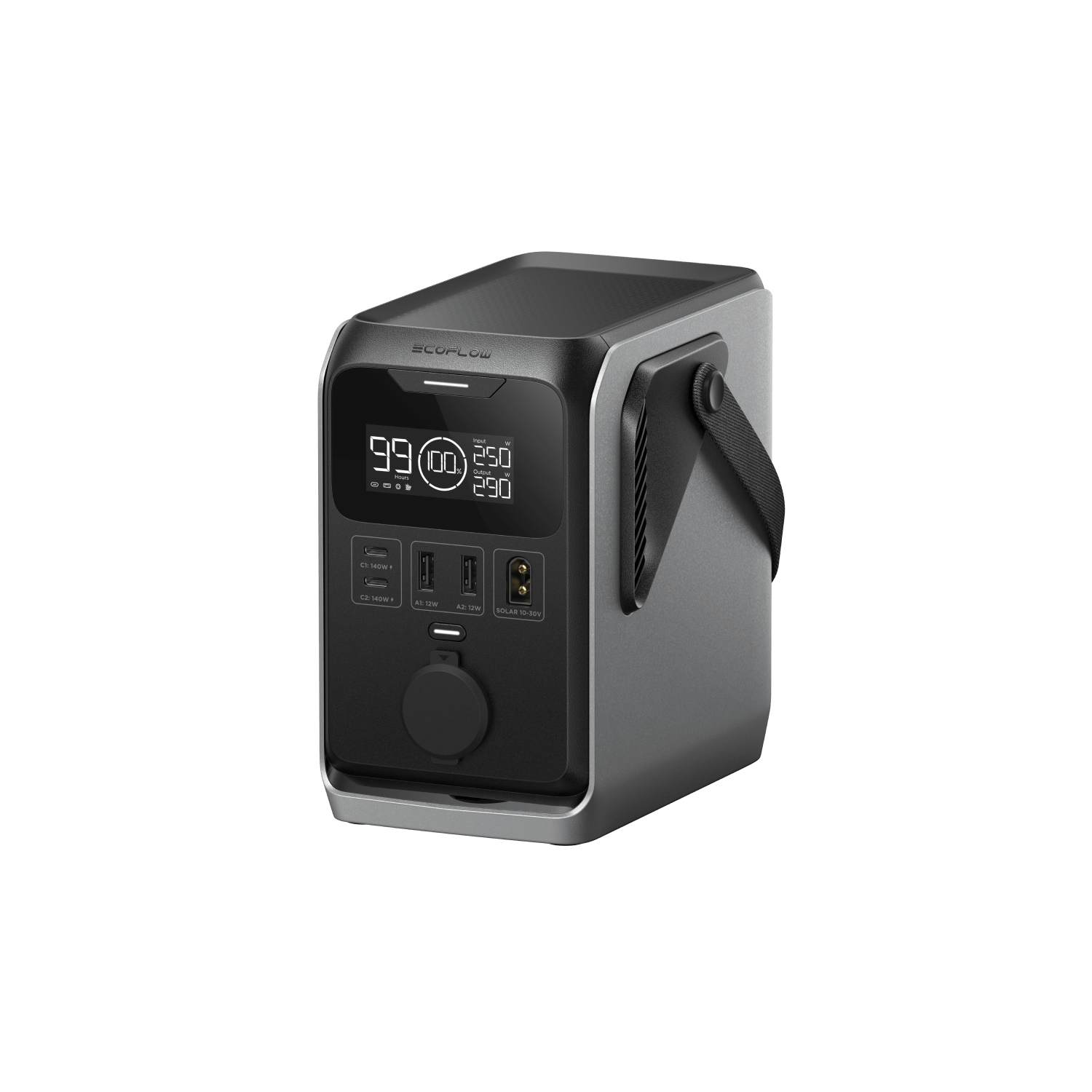
The EcoFlow TRAIL 300 DC is a 288 Wh LFP station for small DC loads that need more than USB alone. Its English user manual identifies the unit as EF-TX-288. The current US listing calls the station “TRAIL 300 DC (288Wh)” and its product-option data displays SKU T300+20W; that same code also appears on a member-only charger offer, so use the model name and manual code rather than SKU alone to distinguish the station from a promotion.
EcoFlow rates total discharge at 300 W. The model has two USB-C input/output ports, each listed up to 140 W, two 12 W USB-A ports and a 12 V car outlet rated 10 A (120 W). It is still a DC-only product: there is no household AC receptacle or AC inverter. The 300 W figure is the station's total ceiling, not a claim that two 140 W USB-C devices, both USB-A ports and a 120 W car load can all draw their maximum simultaneously. Check both the device requirements and the combined load.
What the 300 adds over the 200
The extra 96 Wh and higher 300 W aggregate output are only part of the difference. The 300 adds a genuine 12 V car-style output and an XT60 input that accepts solar or vehicle charging. It can therefore suit a small 12 V campsite accessory or a compatible panel-and-station arrangement that the TRAIL 200 cannot support. The USB-C ports are both rated to 140 W; on the 200, the second port is rated to 100 W. The 300's listed body weighs 5.69 lb rather than 4.03 lb, a reasonable trade if those extra connections are essential but not a free upgrade for someone who only charges USB devices.
The solar input is limited to 10–30 V, 10 A and 110 W maximum. EcoFlow's manual separately rates car input at 12/24 V, 8 A and 100 W maximum. The maximum panel watt label alone does not establish compatibility: the array voltage and current must be within the manual's limits, and EcoFlow says a solar charging cable is not supplied with the station. Its product page likewise says the car charger cable is not included. Check the precise standalone or panel-bundle box contents instead of assuming a familiar cable is in the carton.
A portable source, not a small home-backup inverter
For a phone, tablet, camera or laptop with a compatible USB-C input, the two 140 W ports give flexible charging options. The 12 V car outlet gives a more direct route for a small vehicle accessory, but the 120 W outlet rating does not mean it can drive every 12 V appliance; current draw, startup behavior, plug fit and required runtime still matter. It cannot run an AC-only refrigerator, fan or household appliance. A cigarette-lighter adapter does not turn its DC output into household AC.
The 288 Wh label is stored battery energy, not a guaranteed delivered runtime. EcoFlow does not publish a load-specific AC figure for this model, and there is no AC path to size in the first place. Build a DC-device list, include reserve, and verify the device's voltage and power profile. The station is not expandable; the reviewed manual says its battery is not user-replaceable and the product has no user-serviceable parts.
Outdoor use needs a dry setup
The US listing gives IP30 protection, no built-in light, no Wi-Fi/Bluetooth app support and a three-year warranty. IP30 should not be read as protection from rain or spray: EcoFlow's manual says not to expose the unit to rain or snow. Keep the station covered only in a way that preserves ventilation, and do not use a wet device. The display reports battery and power status; low-current mode for USB-A devices is enabled by double-pressing the multifunction button and ends after about three hours unless re-enabled.
EcoFlow lists the 300 at 2.58 kg / 5.69 lb and dimensions 167 × 115 × 166 mm (HWD). Its manual rounds the weight to about 2.6 kg / 5.7 lb and gives approximately 166 × 115 × 167 mm, broadly consistent within rounding and orientation. Its small footprint can fit a vehicle or gear tote, but a compatible solar panel adds its own bulk; the 300 is not a substitute for planning where that panel will sit or how its cable will be routed.
Alternatives and package checks
Choose the TRAIL 200 DC instead if USB-only loads suffice and saving roughly 1.7 lb matters more than a 12 V socket or solar input. Consider the TRAIL Plus 300 DC only after its US release and package status are clear; the US product page shows it as coming soon, so it is not included in this buying shortlist. If any essential load needs AC, compare a small 120 V inverter station, such as the DELTA 3 Classic, rather than trying to bridge the missing inverter with adapters.
The US product-option list includes 45 W, 60 W and 110 W solar bundles, two camping-light / charger promotions and a combined DELTA Pro 3 + TRAIL 300 offer. These are not distinct 300 DC electrical models. Bundle images and variant labels do not establish every included cable or accessory, so confirm the exact package before ordering. This assessment uses the EcoFlow US product listing and option data plus the English shared user manual; no independent output, runtime, charge-time, drop or ingress testing was performed.
Key details at a glance
| Nameplate battery capacity | 288 Wh |
|---|---|
| Maximum solar input | 110 W |
| Maximum USB-C output per port | 140 W |
| Listed weight | 5.69 lb |
| Compatible extra-battery expansion | No |
| 12 V DC output | 120 W |
| Base warranty term | 3 years |
| Total rated DC output | 300 W |
| AC outlet output | No |
| USB-C ports | 2 |
| USB-A ports | 2 |
| Solar input ports | 1 |
| 12 V car-style output | 120 W |
| Vehicle charge input | 100 W |
| Battery chemistry | LFP |
| Ingress rating | IP30 |
Use the exact model’s instructions for operating limits, supplied equipment and version differences.
Sources for this assessment
A useful match starts with the loads that matter.
Use the finder for hard electrical requirements, then check appliance starting behavior, actual run time and the exact package in the full assessment.