
On this page
Your needs, this model
Does it fit your priorities?
Do you want a 288 Wh direct-DC station with a named 60 W panel option?
The exact U.S. option is titled TRAIL Plus 300 DC (288 Wh) + 60 W Solar Panel. The station lists a 110 W Solar/Car input; the exact panel model, electrical window, lead and box list are not established.
Explore this need in the finder →Must every supplied panel and station lead be documented as a compatible solar-charging arrangement?
The bundle title names a panel, but the selected offer does not state the exact panel model/electrical window or station-side lead. Those unknowns cannot satisfy an essential all-panels compatibility requirement.
Explore this need in the finder →Would an AC-powered appliance be essential for this compact TRAIL package?
No. The EF-TX-288P is a pure-DC station with no AC inverter or AC output rating; requiring AC rules it out.
Explore this need in the finder →The 60 W package, not a different station
EcoFlow's U.S. TRAIL Series page offers a selection called TRAIL Plus 300 DC (288 Wh) + 60 W Solar Panel. The exact variant is 54590654906441, SKU EF-TRAIL300Plus-60W, under product 15350808346697. The product feed showed it available on October 25, 2026; stock can change. The station remains the same EF-TX-288P hardware described in the standalone review. The bundle's meaningful distinction is a panel identified by a 60 W nameplate, not a higher-capacity battery or stronger power output.
This can be a compact option for camp or vehicle users who want a panel named with the station and mostly charge direct-DC devices. The Plus weighs 4.98 lb by itself and has no AC inverter. A panel package does not make it suitable for a fridge, tool or household load that requires an AC receptacle. For AC, compare a small inverter station such as the RIVER 3 Plus; for a different direct-DC chemistry, compare the separate TRAIL 300 DC rather than conflating the models.
What the extra panel rating does—and does not—mean
Sixty watts is 15 W above the 45 W TRAIL Plus panel selection, or one-third more nameplate power. That is a relevant difference if you need the named package to meet a minimum 60 W panel threshold. It is not a measured charging advantage or a prediction of hours to refill the battery. Real solar input depends on the panel's electrical design, sunlight, placement and conditions, and the bundle source does not give the panel model or complete accessory list.
The station's own limit remains 110 W at its shared XT60 Solar/Car input. The EF-TX-288P V1.0 manual gives a 10–30 V range, 10 A maximum and 110 W ceiling, and requires the solar panel output to remain below 30 V. The listed 60 W rating is under the wattage ceiling, but the selected option does not identify the panel's open-circuit voltage, operating voltage/current or station-side lead. Wattage alone therefore cannot establish that the supplied panel and cable form a confirmed operating setup. If all-panel compatibility or an included XT60 lead is essential, those exact details are unknown and this package should not be treated as a verified match for that requirement.
Same compact direct-DC platform
The station is rated for 288 Wh and 300 W total DC output. It lists three USB-C ports rated up to 140 W each, two 12 W USB-A ports, a 120 W 12 V car outlet, a built-in light and app support. Those port figures are individual limits; they do not permit every outlet to deliver its maximum simultaneously above the 300 W overall ceiling. Check the draw and connector of each essential device. A nominal 12 V label alone is not enough to establish that an accessory will work.
For a phone, camera kit or USB-C laptop at a campsite, the three USB-C ports may be more useful than the small panel difference. For a medical device or home appliance with an AC plug, neither panel choice solves the inverter gap. The unit is a small DC station, not an uninterruptible power supply or proof of a specific runtime. Its 288 Wh is nameplate energy; actual usable energy and runtime vary by load and conditions and are not measured here.
Package evidence and carrying tradeoffs
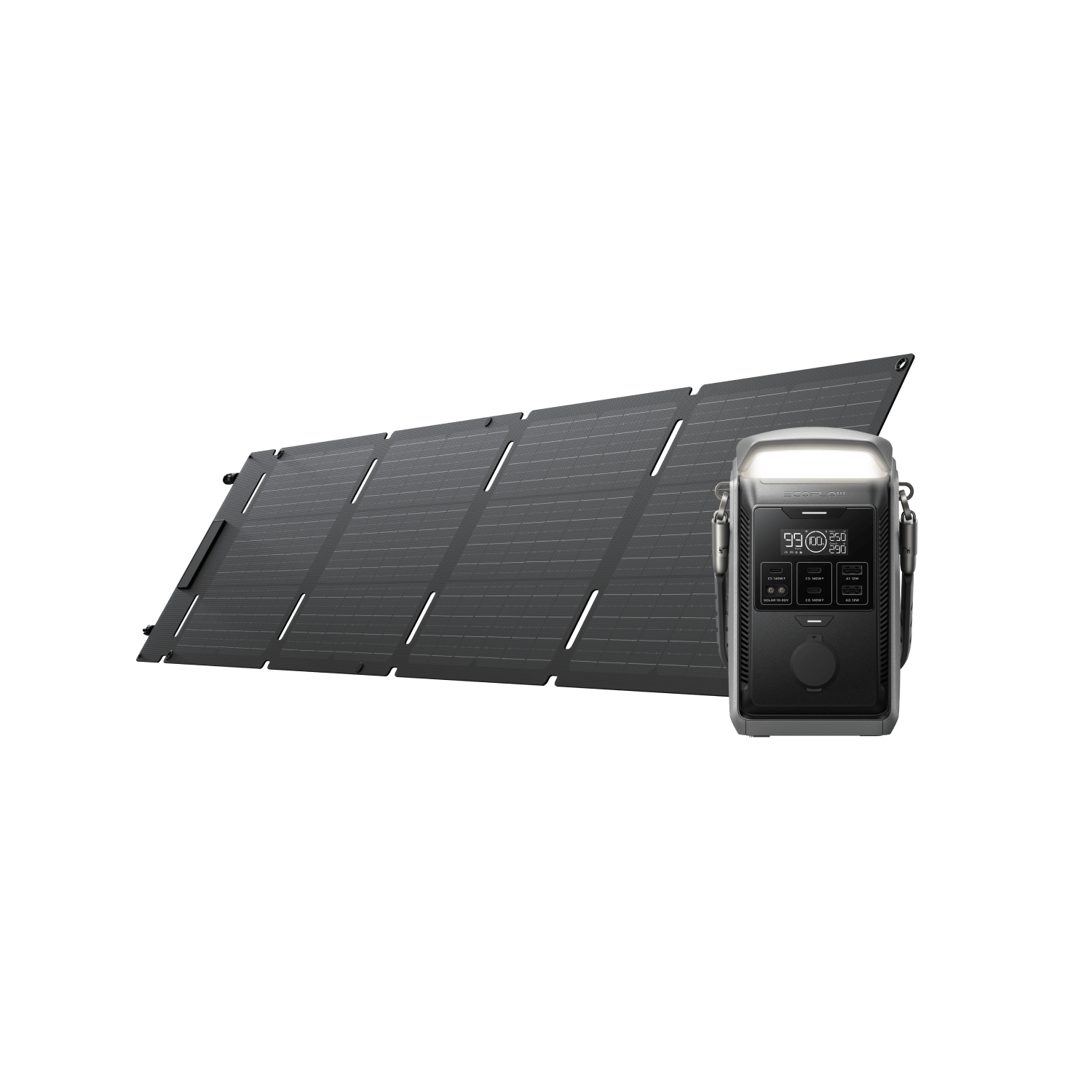
The official selected-option image is a manufacturer illustration of the Plus beside a folding panel. It is tied to this 60 W variant, but it does not show an itemized box or identify the panel. The separate standalone manual lists the station and documents bundle; it does not establish the 60 W bundle's panel model, cables or adapter contents. The station itself is listed at 4.98 lb, while panel mass and complete package weight are not stated. Anyone carrying the full kit should verify total weight and the correct cable rather than planning from the station figure alone.
The TRAIL Plus is IP30, so it is not weatherproof and should be protected from rain and snow. Its V1.0 operating manual is an EcoFlow-branded copy hosted by a dealer, not a direct EcoFlow file; consult EcoFlow Support for a current revision. The manual also warns that Solar/Car input and USB-C3 cannot charge at the same time. A panel bundle does not change that input-sharing rule.
How to choose it in context
The 60 W choice fits a request for a DC-only 288 Wh station and a panel package rated at least 60 W, provided you do not require unverified panel-array or cable details as an essential condition. It fails a need for AC output and a minimum included panel rating above 60 W. The 45 W version is the lower nameplate option; the standalone Plus removes the bundled-panel claim but still has the station's solar input. Neither exact package has confirmed panel count or total carry weight in the available records.
Before relying on solar, confirm the selected panel's model and electrical limits against the station manual, and confirm the station-side lead is in the box or budget time to source the right one. The package title and manufacturer rendering are useful identifiers, not a wiring diagram. If the vendor cannot supply those details, a fully specified compatible panel kit is the safer choice for an essential recharge plan.
Key details at a glance
| Nameplate battery capacity | 288 Wh |
|---|---|
| Maximum solar input | 110 W |
| Included panels, combined nameplate | 60 W |
| Maximum USB-C output per port | 140 W |
| Listed weight | 4.98 lb |
| 12 V DC output | 120 W |
More specifications and setup details
| Base warranty term | 3 years |
|---|---|
| Total rated DC output | 300 W |
| AC outlet output | No |
| USB-C ports | 3 |
| USB-A ports | 2 |
| Solar input ports | 1 |
| 12 V car-style output | 120 W |
| Battery chemistry | NCM |
| Ingress rating | IP30 |
Use the exact model’s instructions for operating limits, supplied equipment and version differences.
Sources for this assessment
- EcoFlow US TRAIL Plus 300 DC product option
- EcoFlow US TRAIL Series specifications
- EcoFlow US TRAIL Series
- EcoFlow US TRAIL Series product-option JSON
- EcoFlow TRAIL Plus 300 DC important safety instructions filed for FCC ID 2A2P9-EFTX288
- EcoFlow TRAIL Plus 300 DC Portable Power Station (288Wh), User Manual V1.0
- EcoFlow US Support: App, Manuals & Downloads
- EcoFlow U.S. Portable Power Stations collection product JSON
- EcoFlow U.S. Portable Power Stations collection page 7
- EcoFlow TRAIL Plus 300 DC + 60 W Solar Panel
- EcoFlow U.S. selected-option image for EcoFlow TRAIL Plus 300 DC + 60 W Solar Panel
- EcoFlow TRAIL Plus 300 DC Portable Power Station (288Wh), User Manual V1.0

A useful match starts with the loads that matter.
Use the finder for hard electrical requirements, then check appliance starting behavior, actual run time and the exact package in the full assessment.