
Your needs, this model
Does it fit your priorities?
Will your essential appliances fit 120 V and 1,500 W of shared continuous AC output?
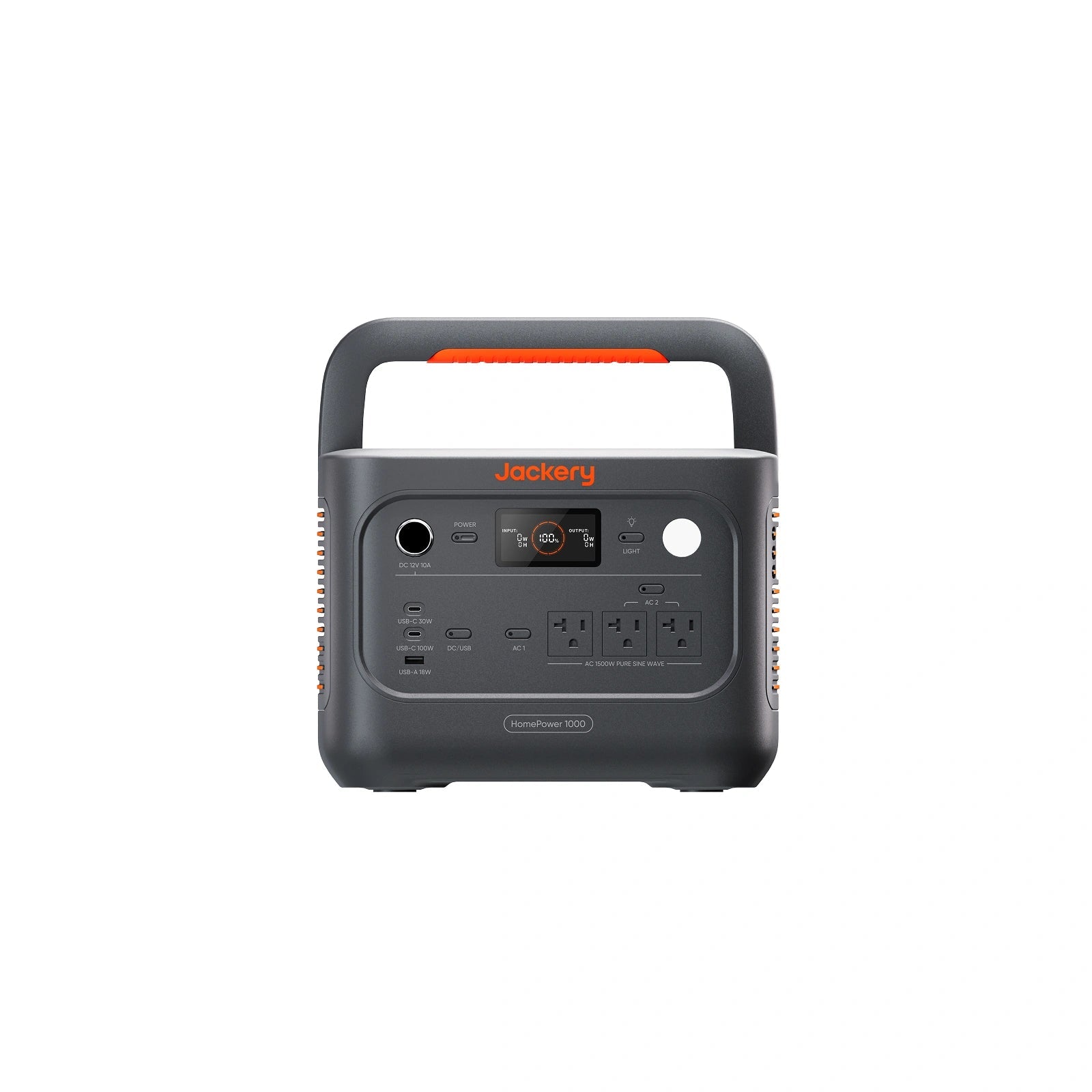
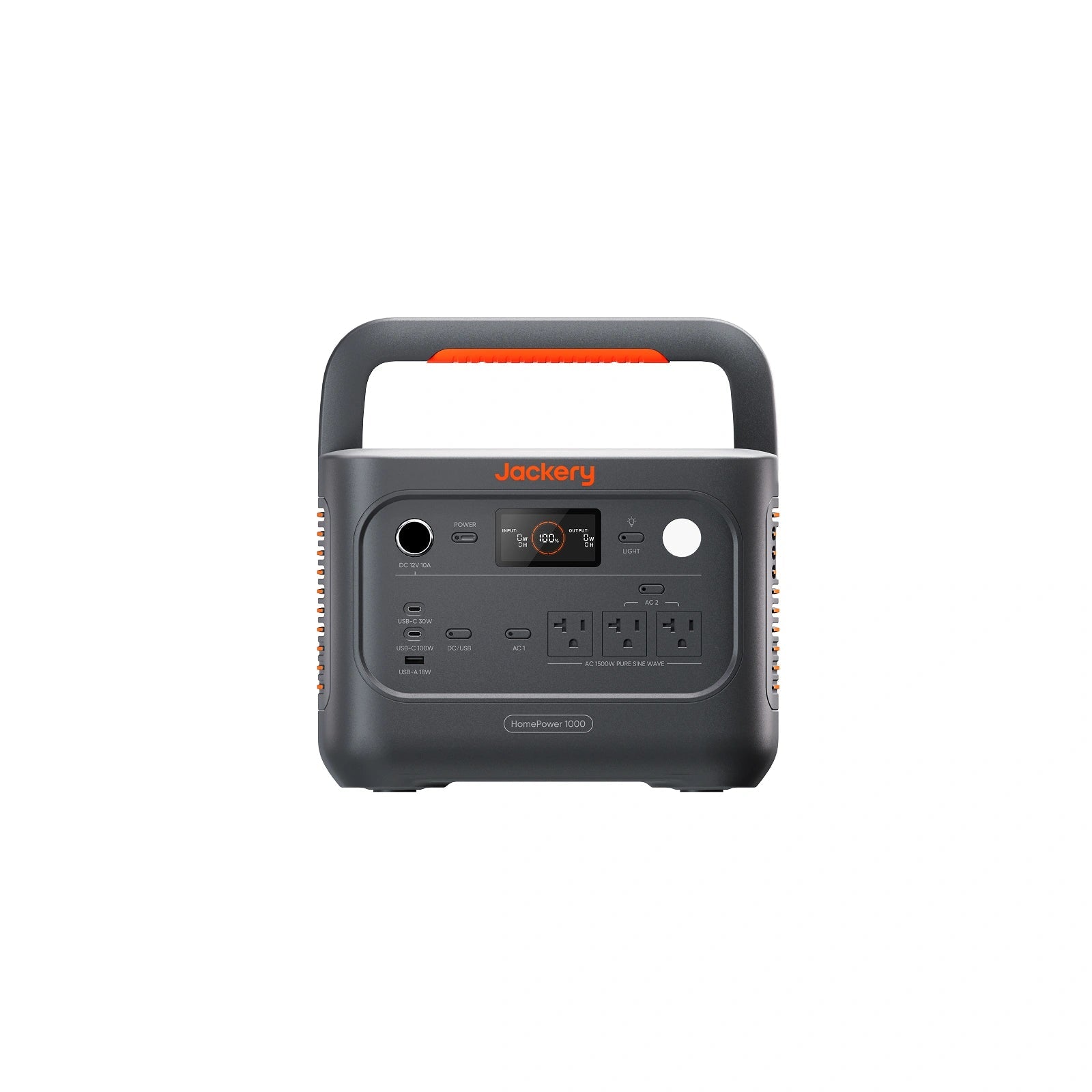
This exact standalone has three 120 V receptacles sharing 1,500 W rated output. Its 3,000 W surge figure is not a continuous rating; check simultaneous running and startup draw for each load.
Explore this need in the finder →Do you already have compatible panels and a station-side solar charging lead?
The station accepts up to 400 W across two parallel DC8020 ports, but this standalone SKU includes no panel or solar connector. The manual says the connector is sold separately; choose a verified panel-and-lead configuration if those items must arrive in the box.
Explore this need in the finder →Can a roughly 23.4 lb, fixed-capacity station meet your carry and expansion needs?
The HomePower 1000 v2 weighs about 23.4 lb; manufacturer support says it does not support battery-pack expansion. A required later pack should rule it out even though standalone weight is manageable for some users.
Explore this need in the finder →Are the 30 W and 100 W USB-C ports enough for your direct-device charging?
It has two USB-C ports rated 30 W and 100 W and one USB-A port rated up to 18 W. Neither port should be treated as a 140 W USB-C supply.
Explore this need in the finder →The Jackery HomePower 1000 v2 is a fixed-capacity, one-station choice for someone who wants a useful set of household outlets without stepping up to a 40-pound, multi-kilowatt-hour unit. The exact manual identifies the black model as JHP-1000A and its white counterpart as JHP-1000A-WH. This assessment covers the standalone station SKUs 21-0001-000445 (black) and 21-0001-000446 (white), not the separate SolarSaga 200 W bundle options shown on the same product page.
Its real ceiling is 1,500 watts at 120 volts
The LiFePO4 battery is rated at 1,024 Wh. Three 120 V AC receptacles share 1,500 W of rated output; the larger 3,000 W figure is an instantaneous surge rating, not the load it can run continuously. That makes the station a plausible source for communications gear, lighting, laptops and selected kitchen appliances when their combined draw and starting surge stay within the published limits. It is not a 240 V source and should not be treated as a home-panel supply just because it can provide an AC outlet.
Nameplate watt-hours are not a guarantee of AC energy delivered to a particular appliance. Inverter losses, load shape, temperature and shutdown settings affect practical duration, and the manufacturer does not give an AC-usable-energy figure tied to a stated load in the sources reviewed here. Build a load list from actual appliance labels and measured or specified running draw; leave margin for motors and compressors that start above their normal wattage.
Portable, but not a pocket-size power bank
At about 23.4 lb and 12.4 by 7.9 by 9.2 inches, this is a single-handled station one person may move between a vehicle, campsite or room, but repeated stairs or long carries still take effort. It has no wheels in the reviewed standalone configuration.
The manufacturer rates the cells for 6,000 cycles to at least 70% capacity. That is a published battery-life specification, not a calendar-life promise or independent cycle test. The official support page does not identify water or dust protection; plan for dry, ventilated use and stay within the listed 14°F–113°F charging and discharging range. Battery packs are not supported, so this model's capacity ceiling does not grow later.
Solar input is a capability, not an included kit
The station supports up to 400 W of solar input at 16–60 V through two DC8020 ports, with a 21 A maximum across the parallel inputs. They are not independent solar trackers. Jackery's instructions say to keep the panel models and quantities consistent when using both inputs; do not mix panel ratings or assume that two connectors double the station's input ceiling. The standalone box list names the station and AC charging cable, not a solar panel. The manual says the station-side solar connector is sold separately, so an owner who already has compatible panels still needs the correct lead.
Jackery separately lists a SolarSaga 200 W package, but that is a distinct SKU and its exact cable contents must be checked as a package rather than borrowed from the station-only box list. A panel's nameplate rating is not a recharge-time promise: sunlight, shade, angle, temperature and the station's voltage/current window determine actual acceptance. If “solar ready out of the box” is essential, this standalone offer does not meet that need.
UPS behavior is not zero-time protection
Jackery specifies a 10 ms switch to battery in UPS mode. That may be useful for equipment whose power supply can ride through a short transfer, but the manual explicitly says the product does not support 0 ms switching and warns against connecting equipment that requires it, including data servers and workstations. In bypass mode, output is limited to 12 A; do not assume the ordinary 1,500 W rating is available while charging and passing power through.
For other devices, its front connections include a 12 V/10 A car-style socket (120 W), one USB-A port rated up to 18 W, and two USB-C ports rated 30 W and 100 W. The stronger USB-C outlet is suitable for compatible laptops, but neither is a 140 W port and per-port maximums do not prove every output can simultaneously deliver its individual peak. AC input is rated up to 1,200 W; the product page's approximately 75-minute normal charge and 50-minute emergency mode are manufacturer estimates, with emergency charging intended for occasional use rather than a routine cycle.
Where the 1000-class choices diverge
Do not mistake this model for the Jackery Explorer 1000 v2, despite the similar name. The reviewed Explorer 1000 v2 is JE-1000D: 1,070 Wh, 1,500 W AC and about 23.8 lb, with a 20 ms transfer specification. The HomePower 1000 v2 is a separate JHP-1000A family at 1,024 Wh, the same 1,500 W AC rating, about 23.4 lb and a 10 ms manufacturer-stated transfer. Neither should be presented as 0 ms or expandable. The Explorer 1000 Plus instead offers a higher 2,000 W inverter and more nameplate storage in a heavier 32 lb station, with an expansion interface; Jackery says its compatible add-on battery is discontinued, so its future expansion availability is uncertain.
Choose the HomePower 1000 v2 when a fixed 1,024 Wh/1,500 W 120 V plan, its stated size and app-enabled controls suit your use. Choose another configuration if you need 240 V, more continuous output, a confirmed expansion path, an included solar panel and lead, weather-rated operation or genuinely uninterrupted backup. Before purchase, select the exact black or white standalone SKU and compare it with the separately listed panel kit; the shared “1000 v2” name does not make the Explorer and HomePower electrical plans interchangeable.
Key details at a glance
| Nameplate battery capacity | 1024 Wh |
|---|---|
| Rated AC output | 1500 W |
| Manufacturer surge rating | 3000 W |
| Maximum solar input | 400 W |
| Included panels, combined nameplate | 0 W |
| Maximum USB-C output per port | 100 W |
| Listed weight | 23.4 lb |
| Compatible extra-battery expansion | No |
| 12 V DC output | 120 W |
| Maximum AC recharge input | 1200 W |
| Manufacturer UPS transfer figure | 10 ms |
| Base warranty term | 3 years |
| AC outlet output | Yes |
| USB-C ports | 2 |
| USB-A ports | 1 |
| Solar input ports | 2 |
| 12 V car-style output | 120 W |
| Battery chemistry | LiFePO4 |
| Expansion battery in this package | No |
| Home Power Panel in this package | No |
| Separate station units in offer | 1 |
| Solar panels in exact offer | 0 |
Use the exact model’s instructions for operating limits, supplied equipment and version differences.
Sources for this assessment
- Jackery U.S. portable-power-station collection
- Jackery U.S. HomePower 1000 v2 product page
- Jackery U.S. HomePower 1000 v2 option data
- Jackery second U.S. HomePower 1000 v2 option record used by observed white card
- Jackery HomePower 1000 User Manual, U.S. product-linked version
- Jackery U.S. HomePower 1000 V2 Basic Information
- U.S. CPSC recall index; exact model/name search
- Jackery black HomePower 1000 v2 exact product rendering
A useful match starts with the loads that matter.
Use the finder for hard electrical requirements, then check appliance starting behavior, actual run time and the exact package in the full assessment.