
On this page
Your needs, this model
Does it fit your priorities?
Does the E2400LFP station in this exact package meet a 120 V, 2,400 W AC and 2,048 Wh station plan?
Yes. The selected solar bundle does not change the E2400LFP station's published 120 V output, 2,400 W continuous AC rating or 2,048 Wh nameplate capacity.
Explore this need in the finder →Does the selected offer include 2 panel(s) with 400 W combined nameplate rating?
The official selected title/SKU names 2 panel(s) at 200 W each; the exact panel model and package cable are not identified.
Explore this need in the finder →Can every panel in this exact package be relied on to charge the E2400 together at the panels’ published ratings?
That exact array is not established. Panel electrical specifications and the bundle wiring/cable arrangement are missing, so an essential all-panel compatibility condition cannot be assumed.
Explore this need in the finder →Pecron · E2400LFP with two 200 W solar panels
Pecron E2400LFP with two 200 W solar panels review
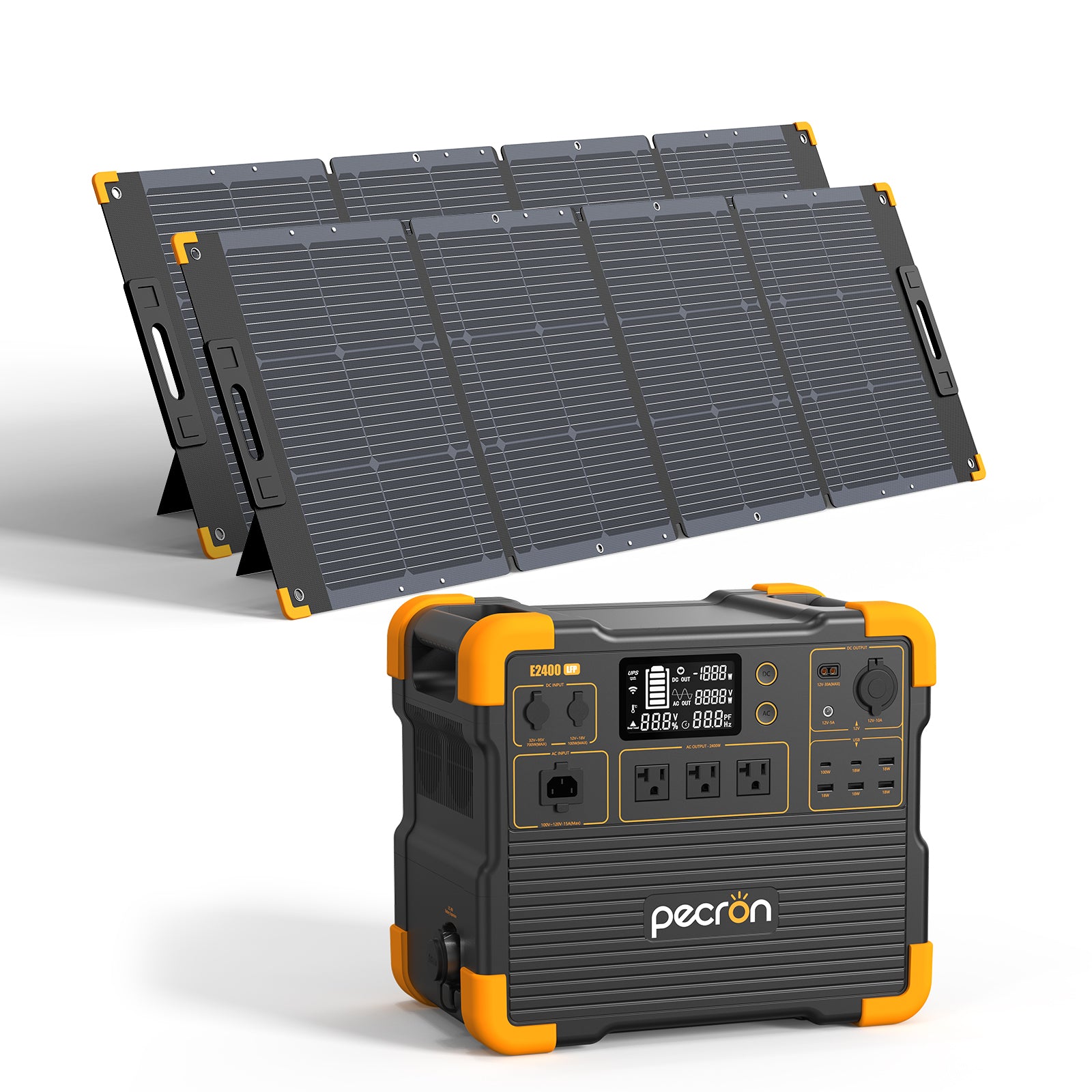
The exact selected U.S. option is identified as E2400LFP-2*200W Solar Panel. That name supports a package with two panels rated at 200 W each, or 400 W combined nameplate. It does not name the panel model, list each panel’s electrical values, or document how the two are connected to the E2400. The configuration therefore adds a useful amount of solar equipment over the one-panel bundle, but it does not remove the need to verify compatibility before planning around the full array.
The station is still a 2,048 Wh / 2,400 W machine
Both panels belong to the charging side of the system. They do not add battery capacity, raise the inverter rating or create a 240 V output. Pecron lists the E2400LFP at 2,048 Wh with 120 V AC output rated to 2,400 W and a 4,000 W surge figure. The peak number is short-duration, so choose loads by continuous draw and startup behavior rather than the surge figure. A power station of this size can run a higher-wattage load for a shorter time than a small device, but the exact duration depends on its real draw and conversion losses.
The panel total is 400 W by the selected option’s wording, not a promise of 400 W at the battery. Sun angle, shade, temperature, panel orientation and charge-controller limits affect input. The E2400’s main solar path is listed at up to 700 W, 32–95 V and 15 A. The official page also mentions a separate 100 W DC5521 input, while its feature summary says 700 W maximum solar charging overall. I use the lower total ceiling rather than assume the two port labels can be added.
Two panels can help with placement, but wiring is not established
Two separate panels can be easier to arrange around a campsite or a parked vehicle than one broad panel, especially if the available clear area is irregular. That is a practical possibility, not a confirmed property of these exact panels: the source option does not identify whether they are rigid or folding models, their dimensions, or a wiring harness. Its image is a manufacturer rendering of two panel forms with the E2400, not an electrical diagram. The image does not prove whether the panels can be wired in series or parallel or which connection cable comes in the carton.
That unknown matters because wattage alone cannot establish a safe input match. Check the exact panel open-circuit voltage, operating voltage/current and the E2400 connector path with Pecron before treating the panels as an integrated, simultaneous array. The station manual’s published input window is a useful limit; it is not a specification sheet for the panels in this particular offer. The bundle can satisfy a simple preference for a panel-inclusive E2400. It should not satisfy an essential requirement that both panels work together at their rated output until that configuration is documented.
Handling, output and charging choices
The station weighs about 45 lb, and the option’s combined weight with two panels is not recorded. If you will move it regularly, consider the station and folded panels as separate pieces and plan for safe lifting. It is more plausible for a vehicle trip, home backup shelf or short move than for carrying far from a car. Pecron lists multiple AC, USB and DC outlets, including a 30 A DC connection that should not be mistaken for a standard car socket. Check the device’s plug and current requirement before choosing based on a generic “12 V” label.
AC charging is another option; Pecron advertises up to 1,800 W input and approximately 1.5 hours to a full charge. Those figures are manufacturer claims and depend on settings and supply conditions. In a planned outage, the two panels are additional recharge equipment, not a guarantee that an appliance can run continuously. Match battery capacity to the overnight or cloudy interval, and treat solar as replenishment only after the exact input arrangement is confirmed.
Who should choose this bundle
This package is a plausible choice if you already want the E2400’s 2 kWh-class battery and 2,400 W 120 V inverter, value a pair of included 200 W-rated panels, and can confirm the cable and combined array details before use. It is a stronger named-panel package than the single 200 W offer, but still below the 600 W combined rating of the three-panel 200 W or two-panel 300 W choices. The E2400 station-only option is cleaner for buyers who own compatible panels already. Choose another verified setup if a guaranteed all-panels-at-rating solar plan, 240 V service, or a documented panel model is essential.
Manufacturer evidence: Pecron E2400LFP U.S. product page and selected option; E2400LFP 100–120 V user manual (April 2025).
Key details at a glance
| Nameplate battery capacity | 2048 Wh |
|---|---|
| Rated AC output | 2400 W |
| Manufacturer surge rating | 4000 W |
| Maximum solar input | 700 W |
| Included panels, combined nameplate | 400 W |
| Maximum USB-C output per port | 100 W |
More specifications and setup details
| Listed weight | 45 lb |
|---|---|
| Compatible extra-battery expansion | Yes |
| 12 V DC output | 360 W |
| Maximum AC recharge input | 1800 W |
| AC outlet output | Yes |
| USB-C ports | 2 |
| USB-A ports | 4 |
| Solar input ports | 2 |
| 12 V car-style output | 120 W |
| Vehicle charge input | 100 W |
| Battery chemistry | LiFePO4 |
| Expansion battery in this package | No |
| Home Power Panel in this package | No |
| Separate station units in offer | 1 |
| Smart Transfer Switch in this package | No |
| Solar panels in exact offer | 2 |
| Included expansion batteries | 0 units |
Use the exact model’s instructions for operating limits, supplied equipment and version differences.
Sources for this assessment


A useful match starts with the loads that matter.
Use the finder for hard electrical requirements, then check appliance starting behavior, actual run time and the exact package in the full assessment.