
On this page
Your needs, this model
Does it fit your priorities?
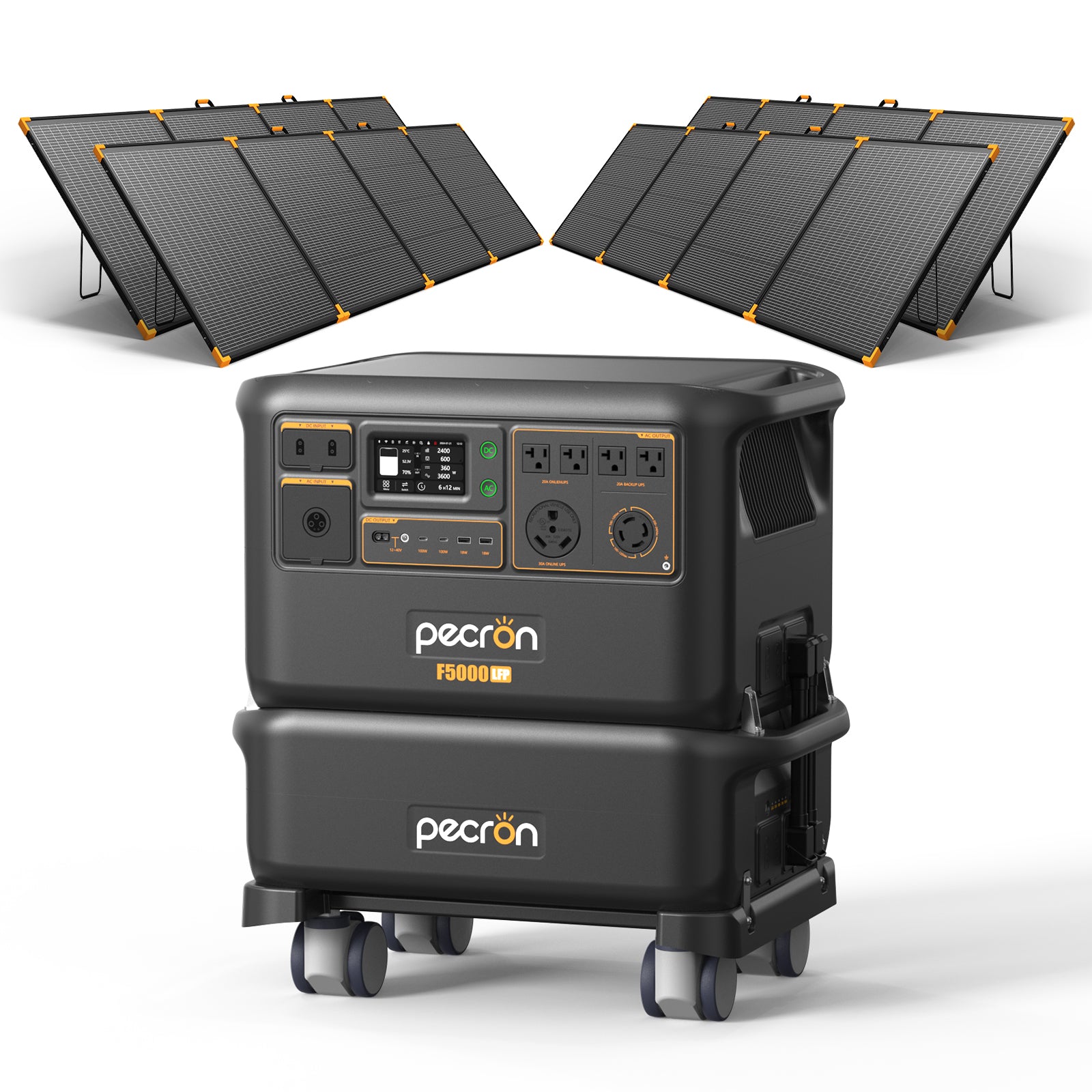
Does this exact option include the F5000LFP host output, one FP5000-48V battery and four PV500 panels?
The archived U.S. SKU names one F5000LFP host, one FP5000-48V unit and four PV500 panels; the host's 240 V/7,200 W rating and the panel count are separate facts.
Explore this need in the finder →Is at least 2,001 W of included PV500 nameplate and a second expansion battery essential?
The exact selected SKU lists four PV500s (2,000 W arithmetic) and one FP5000-48V. It cannot meet a higher panel-nameplate floor or a two-pack minimum; neither unknown total capacity nor image appearance is used.
Explore this need in the finder →Can this offer pass an essential requirement that every supplied PV500 works together at published ratings?
No. The PV500 electrical details and a supported four-panel connection plan remain unknown. A documented two-panel Jackery HomePower 1000 Plus v2 option is a positive alternative for a lower-output 120 V plan; it does not satisfy a request for this station's 240 V output.
Explore this need in the finder →Pecron · one FP5000-48V battery and four PV500 panels
Pecron F5000LFP with one FP5000-48V battery and four PV500 panels review
This is a highly specified bundle around a very large station, not a simple “more solar” version of the F5000LFP. Pecron’s archived U.S. option names one FP5000-48V expansion battery and four PV500 panels alongside one F5000LFP host. That gives the buyer a clear component-count clue at selection time, while leaving two important planning facts unanswered: the exact total storage of the host-plus-battery system and whether all four panels can be connected to this station together in the listed configuration.
What the selected option actually adds
The SKU identifies one additional FP5000-48V unit and four PV500 panels. Pecron’s PV500 page identifies each panel as a 500-watt model, so four labels add up to 2,000 watts of panel nameplate arithmetic. That is not a measured harvest, an expected daily-energy estimate, or proof that the whole bundle will deliver 2,000 watts into the station. The included battery is a separate expansion component; its individual watt-hour rating and the exact combined capacity are not specified in the saved offer materials. Do not multiply a guessed battery size or add it to the host’s published capacity.
Plan around the F5000LFP host, not the bundle title
The host itself is the reason to consider this package for substantial backup loads. Pecron lists 5,120 watt-hours for the station and 120/240-volt output, with 7,200 watts at 240 volts and two 3,600-watt 120-volt output groups. Extra storage equipment does not make the inverter larger or turn every individual receptacle into a 7,200-watt outlet. Map your equipment to the correct output group and check the startup load of motors, pumps or compressors instead of treating a headline rating as a promise for every combination of circuits.
At 123.9 pounds for the host alone, this is not a casual carry-to-a-picnic power bank. The expansion battery and panels add components to store and deploy; the bundle’s combined weight and footprint are not published in the sources reviewed here. It is more plausible as a home, workshop, RV-basecamp or other planned location where a cart, floor area and a repeatable setup matter. Check where the panels can be opened without shade or traffic before choosing a four-panel kit.
Four panels are not a connection diagram
The F5000LFP manual describes two XT60 solar inputs and gives station-side limits, including a 30–180-volt range, up to 25 amps, and a 3,200-watt limit per input. The standalone station’s published maximum solar input is 5,800 watts. Those numbers describe the station, not the PV500 electrical characteristics. The captured PV500 page and product JSON do not specify the panel’s open-circuit voltage, operating voltage, current, connector or the exact cables/adapters included with this selected package. A combined panel nameplate below the station’s overall wattage ceiling still does not tell you whether the panel voltage and current suit an input, or whether the four panels form a supported series/parallel array.
If solar is an essential operating condition, get Pecron’s written array and cable plan for this exact station and PV500 count before purchase. The station’s packing-list solar leads do not by themselves prove compatibility with the panel’s connector. The option’s linked illustration is useful for identifying the package family; use the exact variant/SKU for the advertised component count, not the artwork as a wiring or packing-list document.
Where it sits among the F5000 offers
Compared with the F5000LFP plus four PV500 panels without an extra battery, this option adds one named expansion unit but keeps the same four-panel selection. Compared with battery-only FP5000-48V options, it puts four named panels in the offer as well, without establishing the total storage or a complete solar hookup. The two-battery/six-panel option is a materially larger component set, while the six- or eight-panel-only offers put more emphasis on panel count and no included FP5000-48V unit. These differences are useful for matching a planned setup, but they are not a substitute for package capacity, weight and connection specifications.
Who should choose it—and who should wait
This configuration makes the most sense for someone who already wants the F5000LFP’s 240-volt class output and a substantial single-station base, has a specific use for four portable panels, and values an additional named battery arriving in the same selected option. The ordinary finder can screen for voltage, AC use, DC needs, expansion capability and solar input. Optional advanced limits can distinguish one included expansion battery and four included PV500s from a host-only, battery-only or panel-only offer.
Wait if your essential requirement is a verified combined storage number, a known total package weight, a guaranteed all-four-panel charging arrangement, or a promised solar recharge time. Those details remain unknown here, so a responsible recommendation cannot turn them into “yes.” Check current availability and the exact selected SKU with Pecron as well; the archived product capture showed pre-order language and the variant unavailable in that snapshot, which is not a current inventory guarantee. The bundle’s component list is unusually explicit, but its strongest buying decision still depends on confirming the system details that the listing leaves out.
Key details at a glance
| Rated AC output | 7200 W |
|---|---|
| Maximum solar input | 5800 W |
| Included panels, combined nameplate | 2000 W |
| Maximum USB-C output per port | 100 W |
| Compatible extra-battery expansion | Yes |
| Maximum AC recharge input | 3600 W |
More specifications and setup details
| Manufacturer UPS transfer figure | 20 ms |
|---|---|
| Total rated DC output | 800 W |
| AC outlet output | Yes |
| USB-C ports | 2 |
| USB-A ports | 2 |
| Solar input ports | 2 |
| Battery chemistry | LiFePO4 |
| Expansion battery in this package | Yes |
| Home Power Panel in this package | No |
| Separate station units in offer | 1 |
| Smart Transfer Switch in this package | No |
| Solar panels in exact offer | 4 |
| Included expansion batteries | 1 units |
Use the exact model’s instructions for operating limits, supplied equipment and version differences.
Sources for this assessment

A useful match starts with the loads that matter.
Use the finder for hard electrical requirements, then check appliance starting behavior, actual run time and the exact package in the full assessment.