
On this page
Your needs, this model
Does it fit your priorities?
Will the refrigerator plan need a single 120 V AC station with the published 10 ms UPS transfer figure?
The base FridgePower plan is 120 V, rated at 1,800 W continuous and 2,016 Wh, with a manufacturer-published transfer time no greater than 10 ms; BLUETTI cautions against server/workstation use requiring high-performance UPS.
Explore this need in the finder →Do you want solar input plus the option to expand to 8,064 Wh nameplate capacity?
The FridgePower accepts up to 1,000 W solar input and the manual supports up to three optional BlueCell 200 modules for a maximum 8,064 Wh system. Neither panel nor expansion battery is in this exact offer.
Explore this need in the finder →Must this exact base package omit a separate external status display?
The selected base SKU has no Display 1 in its box. The station's built-in LCD remains available; the Display 1 is a separate bundle option.
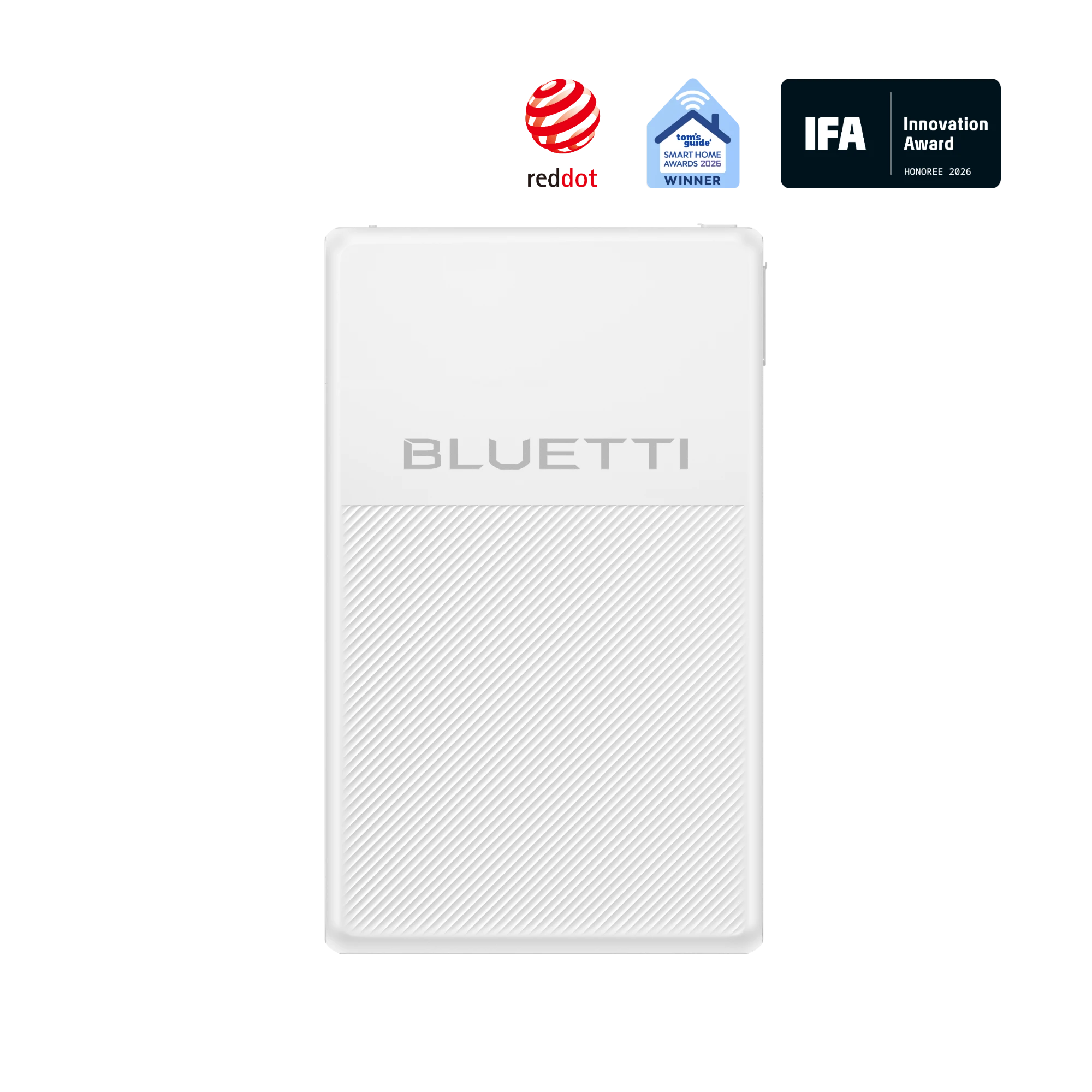
Explore this need in the finder →This assessment is for the U.S. BLUETTI FridgePower base offer, Shopify variant 48862781210843, SKU FRPOWER-US-GW-ID-SPFUS-00. It includes the 2,016 Wh FridgePower station, not an expansion battery, solar panel or external Display 1. Its unusual strength is not portability: it is a thin, wall-mountable reserve with an automatic transfer function aimed at keeping a refrigerator and other selected household loads on through an outage.
A fridge-backup layout, not a general-purpose power box
FridgePower is a 120 V U.S. station rated for 1,800 W continuous output and 3,600 W surge. BLUETTI specifies a transfer time of no more than 10 ms when the unit is connected between the wall supply and an appliance. That lets it stay in a fixed place and take over without someone carrying a battery to the refrigerator after the lights go out. The 2,016 Wh nameplate battery is meaningful reserve, but it is not a promise of a set number of outage hours: compressor duty cycles, startup behavior, room temperature, battery state and inverter losses all affect runtime. Check the appliance label and plan for the load you actually intend to leave connected.
The manual cautions against treating it as a high-performance UPS for data servers or workstations. Nor does this package create a 240 V or split-phase household system, a TT-30 RV receptacle, or a home transfer-switch installation. It is a single 120 V station with AC output. The manual's layout and specification do not establish native USB or 12 V appliance outputs; its expansion connector is for certified battery accessories, not a substitute load outlet. If your essentials are mostly phones, USB-C laptops, car-fridge gear or 240 V equipment, a conventional multi-output station or an installed home-backup system may be the better tool.
Thin dimensions still require a real installation plan
The body is only 3.07 in thick, at 22.83 × 13.78 in, but BLUETTI lists the station at about 43.43 lb. That combination can free up floor space, yet it is not a light panel to casually lift onto a refrigerator. The manual documents wall mounting and flat placement, calls for clearance around the unit, and warns that the handle setup is not intended for ordinary mobile use; if it must travel, secure it against bumps and drops. A solid mounting surface, safe clearances, accessible outlets and room to inspect the cables matter more than the slim silhouette. Its IP20 rating and the manual's wet-environment warning also make this an indoor appliance, not a rain-ready campsite battery.
Charging and capacity: useful options, with accessories to verify
The U.S. AC charging ceiling is 1,440 W, while the manual lists a 1,000 W maximum solar input at 12–60 V and up to 20 A. Solar panels are not included in this exact offer. BLUETTI includes a solar charging lead in the station's documented packing list, but the array still has to stay within the station's voltage and current limits; never choose a panel arrangement by wattage alone. The manual says as many as three BlueCell 200 expansion batteries can raise the combined nameplate capacity to 8,064 Wh. Those batteries are optional additions, not part of this base SKU, and they turn the simple fridge reserve into a heavier multi-component system.
At 1,800 W, the station can support more than a refrigerator if the combined load stays within its output rating, but every extra appliance consumes the same finite battery. A kettle or coffee maker may draw heavily for a short period; leaving nonessential loads attached can shorten the time available for the refrigerator. In Power Lifting mode BLUETTI permits certain pure-resistive loads rated up to 3,000 W, while explicitly retaining an actual output ceiling of 1,800 W. Do not treat that feature as a higher continuous rating or as a way to run a motor load above the station's normal rating.
Who should pick this exact offer
Choose the base FridgePower if your priority is a fixed indoor refrigerator backup, you value a 10 ms UPS figure, and you can accept one 120 V AC plan with no panel or expansion battery in the box. Its slim form helps when conventional wheeled stations are awkward to park beside a fridge, but its 43 lb weight makes installation and lifting part of the decision. If you want a broader portable power source, the AC180 with a 200 W solar kit is a more conventional carry-to-camp design with native DC and USB outputs, though its base battery is smaller and its package panel identity has separate uncertainties. For substantially more stored energy and selectable 120/240 V output, compare the much heavier Apex 300; it is not the same compact, fridge-first installation.
How the finder should treat it
A 120 V requirement, a household AC requirement, a 10 ms-or-slower UPS threshold, or solar input can fit this station's documented base plan. A 240 V requirement, essential TT-30 outlet, included-panel requirement, or a need for native 12 V/USB output should rule it out. Its expansion support is real, but the extra batteries are not included; select the base offer only if optional future purchases are acceptable. This exact box also does not include Display 1. If the station will be mounted out of sight and a separate status screen is essential, see the FridgePower + Display 1 offer instead. The screen changes monitoring convenience, not this station's capacity, wattage or transfer specification.
Primary references: BLUETTI's selected U.S. FridgePower offer and FridgePower User Manual V2.0.
Key details at a glance
| Nameplate battery capacity | 2016 Wh |
|---|---|
| Rated AC output | 1800 W |
| Manufacturer surge rating | 3600 W |
| Maximum solar input | 1000 W |
| Included panels, combined nameplate | 0 W |
| Maximum USB-C output per port | 0 W |
More specifications and setup details
| Listed weight | 43.43 lb |
|---|---|
| Compatible extra-battery expansion | Yes |
| 12 V DC output | 0 W |
| Maximum AC recharge input | 1440 W |
| Manufacturer UPS transfer figure | 10 ms |
| Total rated DC output | 0 W |
| AC outlet output | Yes |
| USB-C ports | 0 |
| USB-A ports | 0 |
| Solar input ports | 1 |
| 12 V car-style output | 0 W |
| Battery chemistry | LiFePO4 |
| Ingress rating | IP20 |
| TT-30 RV outlet | No |
| Manufacturer minimum charge temperature | 0 °C |
| Manufacturer minimum discharge temperature | -20 °C |
| Expansion battery in this package | No |
| Expansion packs in exact offer | 0 |
| Solar panels in exact offer | 0 |
| Included expansion batteries | 0 units |
Use the exact model’s instructions for operating limits, supplied equipment and version differences.
Sources for this assessment

A useful match starts with the loads that matter.
Use the finder for hard electrical requirements, then check appliance starting behavior, actual run time and the exact package in the full assessment.