
On this page
Your needs, this model
Does it fit your priorities?
Can a 120 V plan needing 2,200 W continuous and 5,376 Wh nameplate capacity use this exact option?
The E1500 V3 remains 2,200 W at 120 V; the included EP3800 packs raise combined nameplate storage to 5,376 Wh, not the inverter rating.
Explore this need in the finder →Must this exact 1-pack EP3800-48V option include its battery?
The selected E1500 SKU names the included EP3800-48V pack count; verify the bundle-specific cable list before connecting.
Explore this need in the finder →Is the station-and-battery plan within a 105.2 lb combined component limit?
Published component masses total about 105.2 lb before leads (E1500 about 38.4 lb plus 1 packs at about 66.8 lb each).
Explore this need in the finder →Pecron · E1500LFP V3 with one EP3800-48V battery
Pecron E1500LFP V3 with one EP3800-48V review
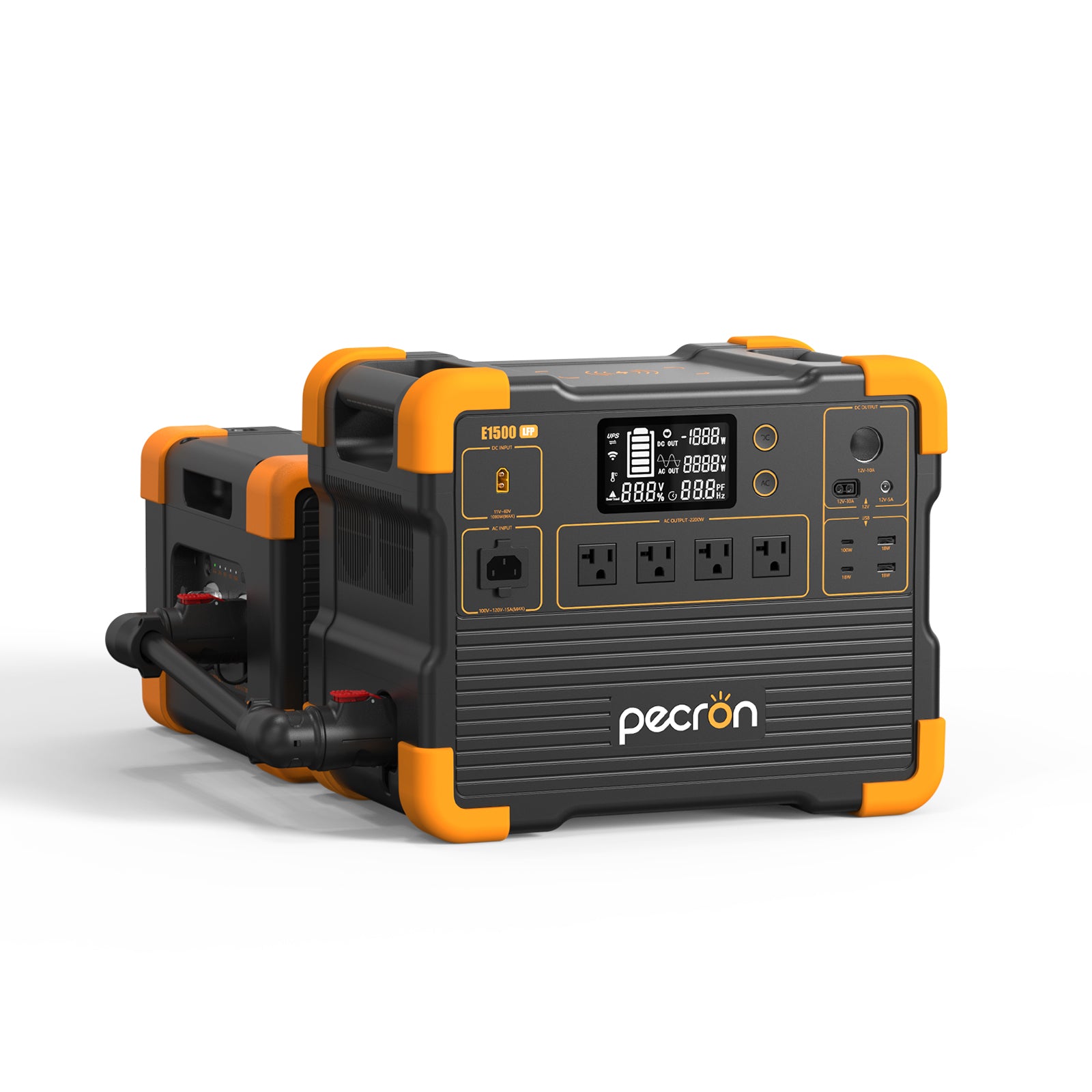
This is the exact U.S. E1500LFP V3 option whose selected SKU is E1500LFP+EP3800-48V, not the station-only E1500LFP. Pecron’s product option identifies one 3,840 Wh EP3800-48V pack. The station itself remains the same 1,536 Wh, 2,200 W V3 reviewed in the standalone E1500LFP review; the added battery raises the combined nameplate storage to 5,376 Wh without raising the inverter rating. This selected U.S. option was unavailable in the captured product data on October 25, 2026. That is a dated stock observation, not a reason to erase the configuration or a promise that it is orderable today.
More stored energy, not a larger AC supply
Pecron lists 120 V AC output at 2,200 W continuous and a 4,400 W peak for 10 ms. The E1500 manual identifies a 51.2 V, 30 Ah LiFePO4 battery for 1,536 Wh in the station. The manufacturer’s U.S. EP3800 page and its V2 manual specify 3,840 Wh (51.2 V, 75 Ah) for the extra battery. On the selected one-pack plan, adding those published nameplate capacities gives 5,376 Wh. Pecron’s E1500 page separately says that two EP3800-48V batteries can expand the station to 9,216 Wh, confirming this is a storage expansion path rather than a second inverter. Do not turn the 4,400 W surge figure into a continuous load rating, and do not treat the larger battery as a way to run 240 V equipment: this is still a 120 V station.
That distinction is useful when your problem is duration. A refrigerator, network gear, lights or a moderate tool load may benefit from more reserve, but every appliance still has to fit the E1500’s 2,200 W continuous ceiling and its startup behavior. Nameplate capacity is not the amount of AC energy guaranteed at the wall; conversion losses, the load profile, temperature and inverter draw all matter. There is no manufacturer-published AC-usable-energy figure in the material reviewed here, so a long runtime should be estimated from the actual load, not promised from 5,376 Wh alone.
The pack changes the carrying plan
The base station is listed at about 38.4 lb. Pecron lists the EP3800-48V at about 66.8 lb, so their combined component mass is approximately 105.2 lb before cables or packaging. The expansion battery is a separate large enclosure—about 17.3 × 12.2 × 8.8 inches—and should be planned as a substantial item in its own right. A person who found the standalone E1500 manageable may find this bundle a poor choice for frequent stairs, a small vehicle or one-handed setup. The two-pack offer is heavier still; compare it only if your capacity need is real and your storage and moving plan can support it.
The EP3800 manual describes connection through the MJ32 cascade port and says to begin with host and battery states of charge within 10 percent. It also describes unique serial-number settings for cascaded packs and status indicators while the units balance. Those are setup details worth reading before first use. The E1500 product page sets a two-pack maximum for this station; generic battery instructions for other hosts should not be treated as permission to exceed that E1500 limit. The selected option confirms one pack, but its own package checklist was not available in the archived product record. The separate battery manual lists an MJ32-48V cascade cable among the battery’s packing-list items; confirm the exact E1500 bundle’s supplied lead and instructions before relying on the connection. Keep the equipment dry and ventilated as the battery manual directs.
Solar and questionnaire fit
The added battery does not change the E1500’s single XT60 solar input, published 11–60 V range, 20 A maximum or 1,000 W input ceiling. This expansion-only SKU includes no solar panel. If a panel is essential, choose a separate E1500 panel option and review its exact panel identity, cable and array wiring instead. The normal finder path can distinguish an essential expansion capability, 120 V output and AC outlet from an ordinary capacity preference; the advanced capacity threshold should be set to at least 5,376 Wh only when the added pack is part of your actual plan. A strict maximum total station-and-expansion weight needs a limit above roughly 105.2 lb, with room for cable weight. A 240 V requirement, a panel-in-box requirement or a lifting ceiling below that combined mass rules this option out.
Choose the station-only E1500 when 1,536 Wh is enough and easier handling matters more. Choose the two-EP3800 configuration only when the larger nameplate reserve justifies moving two heavy batteries. The one-pack configuration is the middle step: substantially more storage than the base station, but still one 120 V / 2,200 W inverter and a very heavy combined system. Check current availability, the exact V3 generation, package contents and connection instructions before purchase.
Key details at a glance
| Nameplate battery capacity | 5376 Wh |
|---|---|
| Rated AC output | 2200 W |
| Manufacturer surge rating | 4400 W |
| Maximum solar input | 1000 W |
| Included panels, combined nameplate | 0 W |
| Maximum USB-C output per port | 100 W |
More specifications and setup details
| Listed weight | 38.4 lb |
|---|---|
| Compatible extra-battery expansion | Yes |
| 12 V DC output | 360 W |
| Maximum AC recharge input | 1400 W |
| AC outlet output | Yes |
| USB-C ports | 2 |
| USB-A ports | 2 |
| Solar input ports | 1 |
| 12 V car-style output | 120 W |
| Vehicle charge input | 100 W |
| Battery chemistry | LiFePO4 |
| Expansion battery in this package | Yes |
| Home Power Panel in this package | No |
| Separate station units in offer | 1 |
| Smart Transfer Switch in this package | No |
| Solar panels in exact offer | 0 |
| Included expansion batteries | 1 units |
Use the exact model’s instructions for operating limits, supplied equipment and version differences.
Sources for this assessment

A useful match starts with the loads that matter.
Use the finder for hard electrical requirements, then check appliance starting behavior, actual run time and the exact package in the full assessment.