
On this page
Your needs, this model
Does it fit your priorities?
Does the selected E3800LFP package meet a 7,680 Wh nameplate minimum at 120 V and 4,200 W?
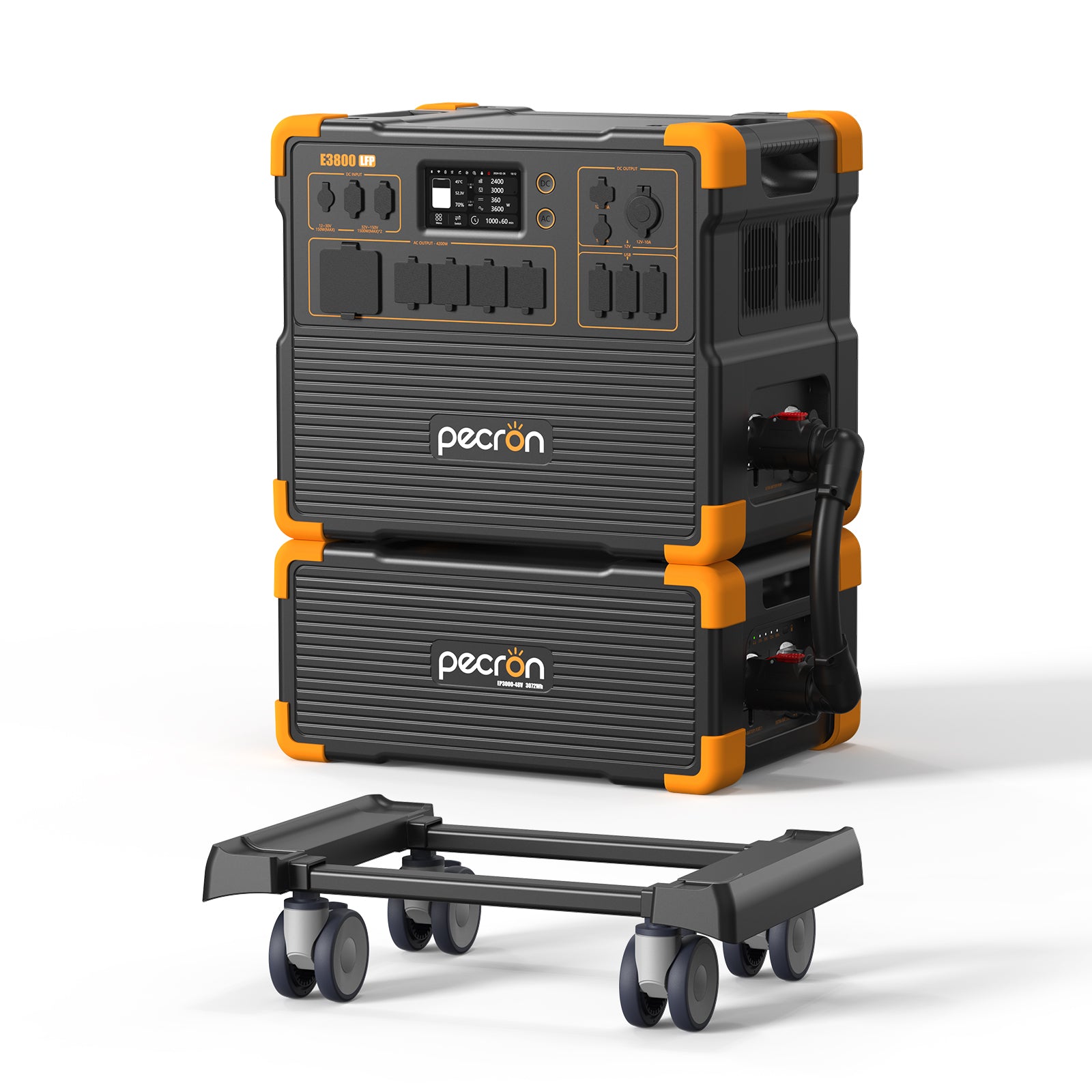
The selected SKU has one E3800LFP station and 1 EP3800-48V pack(s), for 7,680 Wh combined nameplate capacity; the station output remains 4,200 W at 120 V.
Explore this need in the finder →Must the exact offer include a compatible expansion battery rather than only support one as a separate purchase?
Yes for this configuration: the captured U.S. selected option SKU E3800LFP-EP3800-48V names 1 EP3800-48V pack(s). The cable contents remain unconfirmed.
Explore this need in the finder →Is the station’s documented 3,000 W maximum solar-input ceiling sufficient even though this battery bundle includes no panels?
The E3800 station documents two XT60 inputs and up to 3,000 W combined within its stated voltage range, but the selected EP3800 option does not include solar panels.
Explore this need in the finder →Pecron · E3800LFP with one EP3800-48V
Pecron E3800LFP with one EP3800-48V review
This is the exact U.S. E3800LFP option identified as E3800LFP-EP3800-48V, not the station-only model. Pecron’s selected-option listing names one EP3800-48V battery. The E3800LFP manual lists a 3,840 Wh station and supports cascading up to six EP3800-48V packs; the separate battery manual lists 3,840 Wh for each pack. Added together, this one-pack configuration has 7,680 Wh of nameplate capacity. That arithmetic is not a promise of 7,680 Wh of usable AC energy.
What the extra battery changes
The E3800LFP’s inverter remains rated for 4,200 W at 120 V. One extra battery can provide more stored energy for a long outage or a work area with repeated loads, but it does not let this single station run a 240 V appliance, raise the rated output above 4,200 W, or guarantee an exact number of hours. Real runtime depends on the load, duty cycle, conversion losses and operating conditions. Treat the capacity figure as a planning ceiling on the battery nameplate, not as measured AC delivery.
For a fixed backup plan, 7.68 kWh gives more reserve than the standalone E3800LFP’s 3.84 kWh, while retaining the same station outputs and solar-input limits. If you have only occasional short loads, the standalone station may be the simpler choice. If you need more energy than one expansion pack provides, the E3800LFP documentation permits additional EP3800-48V units, up to six, but each extra module adds cost, floor space, connection work and substantial mass.
Plan around separate heavy modules
Pecron lists the E3800LFP at about 87.3 lb and the EP3800-48V at about 66.8 lb. Together that is roughly 154.1 lb before cables or accessories. This is not a single object to carry through a doorway. The separate handles and stackable design make the components easier to position than an equivalent one-piece mass, but they still need a stable, dry, ventilated location with clear access to the ports. Keep the station and battery where their combined footprint and connected leads are not a trip hazard.
The E3800 manual directs owners to use the official cascading cable with an MJ32 socket when connecting six packs and explains that pack numbering and similar state of charge help setup. Follow the current E3800 and EP3800 instructions for any combination. The selected SKU establishes that one battery is part of the offer; the captured option record does not confirm the exact cable model or whether a connection cable is in that box. Check that detail with the seller before assuming this is ready to connect out of the carton.
Do not mistake expansion for 240 V
This offer contains one station plus one expansion battery. It is still a single 120 V E3800LFP system. Pecron describes a separate 240 V arrangement using two E3800LFP stations and a connection box; that is a different configuration, not an outcome of adding one battery. If your essential load is a 240 V well pump, workshop machine or transfer-switch circuit, select only a documented two-station plan and confirm its electrical installation requirements. A larger battery does not change voltage.
The E3800’s dual XT60 solar inputs are a separate station feature: the published limit is up to 1,500 W at each input, 3,000 W total, within the 32–150 V range. No solar panels are named in this battery option. A household array must meet the manufacturer’s voltage and current limits and use the appropriate leads; do not interpret the expansion-battery image as a solar kit.
Who should compare another configuration?
Choose this option when a 4,200 W single-station ceiling is enough and the extra 3,840 Wh reserve matters more than mobility. The standalone E3800LFP review is the simpler 3,840 Wh alternative. If you need additional storage but a lower output ceiling is adequate, compare the E1500LFP V3 with one EP3800-48V; it is a different 120 V station with a lower rated AC output, not a substitute for this E3800 inverter. For 240 V, do not compare battery counts alone—look for the separately documented two-station system.
How the finder choices change the fit
In the ordinary finder, select 120 V output, require AC outlets and set a minimum capacity of 7,680 Wh if those are essential. Requiring an included expansion battery will distinguish this selected option from the station-only E3800. A 7,681 Wh minimum rejects the one-pack configuration; the two-pack E3800 option can still clear that threshold. A solar-input requirement up to 3,000 W describes the station, not included panels. If you require panels in the exact box, this battery-only package is the wrong offer.
Use the advanced capacity and output choices only when you know your load. This is a large, heavy reserve system for planned stationary use—not a lightweight camping battery, not a measured runtime guarantee, and not a 240 V solution. Check the selected SKU, cable list, cart terms and current availability before purchase; the manufacturer image illustrates the option but does not settle those package details.
Key details at a glance
| Nameplate battery capacity | 7680 Wh |
|---|---|
| Rated AC output | 4200 W |
| Maximum solar input | 3000 W |
| Included panels, combined nameplate | 0 W |
| Maximum USB-C output per port | 100 W |
| Listed weight | 87.3 lb |
More specifications and setup details
| Compatible extra-battery expansion | Yes |
|---|---|
| 12 V DC output | 360 W |
| Maximum AC recharge input | 3200 W |
| AC outlet output | Yes |
| USB-C ports | 2 |
| USB-A ports | 4 |
| Solar input ports | 2 |
| 12 V car-style output | 120 W |
| Vehicle charge input | 150 W |
| Battery chemistry | LiFePO4 |
| Expansion battery in this package | Yes |
| Home Power Panel in this package | No |
| Separate station units in offer | 1 |
| Smart Transfer Switch in this package | No |
| Solar panels in exact offer | 0 |
| Included expansion batteries | 1 units |
Use the exact model’s instructions for operating limits, supplied equipment and version differences.
Sources for this assessment

A useful match starts with the loads that matter.
Use the finder for hard electrical requirements, then check appliance starting behavior, actual run time and the exact package in the full assessment.