
Your needs, this model
Does it fit your priorities?
Is 240 V equipment a hard requirement, rather than just more 120 V outlets?
The base TITAN 5000 is specified for 120/240 V split-phase output at 7,200 W total. It is the middle choice between Classic’s 120 V-only design and Plus’s higher solar input; verify each load and installation path.
Explore this need in the finder →Will you recharge from a solar array with as much as 4,000 W of input?
EcoFlow lists one PV input, 40–450 V and 16 A, with a 4,000 W maximum. The input limit is not a prediction of daily harvest, and a base-station cable is not the panel array.
Explore this need in the finder →Do you need a built-in USB-C outlet or a TT-30 RV receptacle?
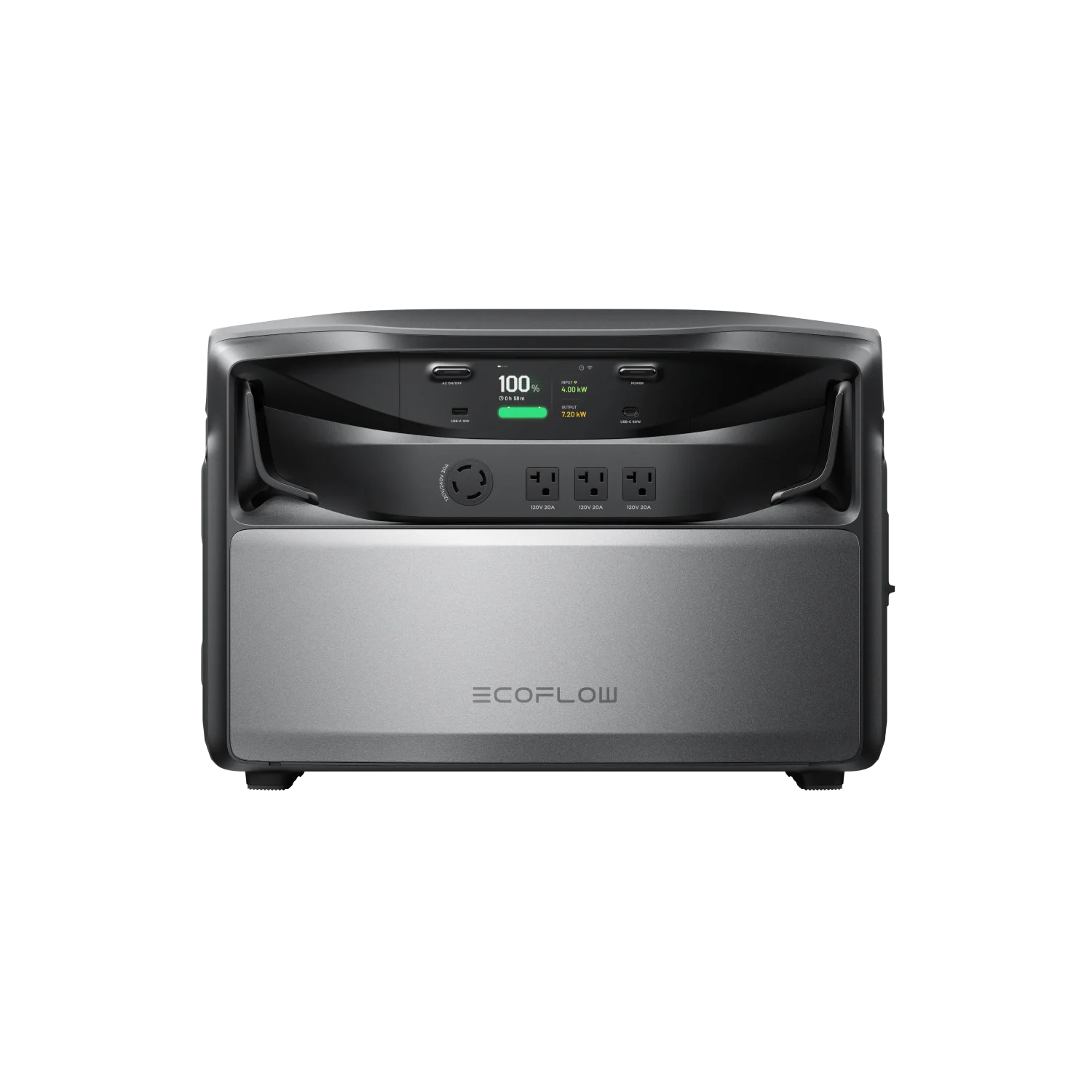
The official configuration table lists a 60 W USB-C port, but the outlet set is three 5-20R and one L14-30R—not a TT-30. Check the exact connector and total-load limits before choosing.
Explore this need in the finder →Separate the station SKU from the coupon
EcoFlow’s U.S. page identifies a standalone TITAN 5000 option as SKU EFTITAN-US (variant 55912975138889). In the page capture dated October 25, 2026, that exact station option was marked unavailable. The page’s selected $50 TITAN Series Coupon, SKU TT-DEPOSIT, is a separate promotion—not a 5 kWh power station and not a substitute product. This review is about the base TITAN 5000, not an extra-battery or Smart Home Panel bundle. Confirm the exact station option and availability again before you compare a seller offer.
Plan for the voltage your appliances actually use
The base unit is rated for 7,200 W of 120/240 V split-phase AC. EcoFlow lists three NEMA 5-20R outlets and one L14-30R outlet. That mix gives a homeowner a direct 240 V connection option as well as ordinary 120 V outlets, but it does not create several independent 7.2 kW supplies: the inverter rating is the shared system ceiling. Add the simultaneous running watts and check motor or compressor starting demands against the equipment instructions. A refrigerator, internet gear and selected household loads may be a very different plan from a central air conditioner or a shop tool.
House wiring is a separate decision. EcoFlow lists compatibility with its 240 V Smart Home Panel 10, but the base EFTITAN-US option is not the panel package. The page describes the panel as a separate offer. A hardwired backup arrangement needs the correct panel, transfer design and qualified installation under local requirements; never feed a house circuit from a wall outlet or an improvised cord.
Its middle position is the solar ceiling
The base station starts at 5,017.6 Wh of LFP nameplate capacity. EcoFlow says the system can grow to 30 kWh by adding as many as five TITAN batteries; those are extra components, not energy included in the standalone SKU. Expansion adds stored energy and runtime potential, not more inverter output. Nameplate watt-hours also are not a promise of delivered AC watt-hours: conversion loss, reserve settings, temperature and a variable load all affect actual run time.
EcoFlow rates the TITAN 5000’s single solar input at 4,000 W, 40–450 V and 16 A. That is a useful ceiling for a substantial array, but it is not a forecast of daily production. Match a proposed string to the input’s voltage and current limits, including cold-weather open-circuit voltage, and account for shade, season and cable routing. The product page lists a Solar-to-HP500 cable in the base box, but the standalone station is not a solar-panel bundle. Do not treat a promotional gift or a separate solar variant as the base package.
Choose it over Classic or Plus for a concrete reason
The 5000 sits between two genuinely different offers. Classic is limited to 120 V output and 3,200 W of solar input, so it is the wrong choice when a 240 V appliance is essential. Plus retains a 7.2 kW battery-output rating but raises the solar input to 8,000 W through two 4,000 W MPPT inputs; its advertised PV Boost can reach a higher output when solar contributes. If your array stays at or below 4 kW and you want built-in USB-C, the standard TITAN’s listed 60 W USB-C and 18 W USB-A ports are useful differences. The Classic assessment and Plus assessment detail those tradeoffs.
Account for the physical and installation footprint
EcoFlow lists the base station at 119 lb (54 kg), with an IP20 rating. That is a substantial home-backup unit, not a station to carry routinely between a campsite and a car; plan a protected location and safe handling before ordering. Manufacturer specifications list 5 years of warranty and charging from 32°F to 113°F, with discharge from 14°F to 113°F. Those published limits are not independent environmental testing. The page’s <20 ms transfer statement is tied to a Smart Home Panel 10 setup, not an independent continuity test of every direct-outlet use.
Who should keep it on the shortlist
Keep the standard TITAN 5000 in view if 240 V output is essential, 7.2 kW is sufficient for your calculated simultaneous load, and 4 kW of compatible solar input is enough. Step up to Plus only if the larger array or solar-assisted output matters; choose Classic only when 120 V-only operation works. If you need a light, weather-exposed camping battery or direct 12 V vehicle socket, this heavy home system is not a natural fit. No runtime, noise, transfer, installation or appliance-start test was performed here; size it from verified manufacturer limits and your actual load list.
Manufacturer reference: EcoFlow U.S. EcoFlow TITAN 5000 product page. Confirm the exact standalone option, current availability and manual before purchase or installation.
Key details at a glance
| Nameplate battery capacity | 5017.6 Wh |
|---|---|
| Rated AC output | 7200 W |
| Maximum solar input | 4000 W |
| Maximum USB-C output per port | 60 W |
| Listed weight | 119 lb |
| Compatible extra-battery expansion | Yes |
| Manufacturer UPS transfer figure | 20 ms |
| Base warranty term | 5 years |
| AC outlet output | Yes |
| USB-C ports | 1 |
| USB-A ports | 1 |
| Solar input ports | 1 |
| Battery chemistry | LFP |
| Ingress rating | IP20 |
| Expansion battery in this package | No |
| Home Power Panel in this package | No |
| HPP 120/240 V split-phase | Yes |
| Smart Transfer Switch in this package | No |
Use the exact model’s instructions for operating limits, supplied equipment and version differences.
Sources for this assessment

A useful match starts with the loads that matter.
Use the finder for hard electrical requirements, then check appliance starting behavior, actual run time and the exact package in the full assessment.